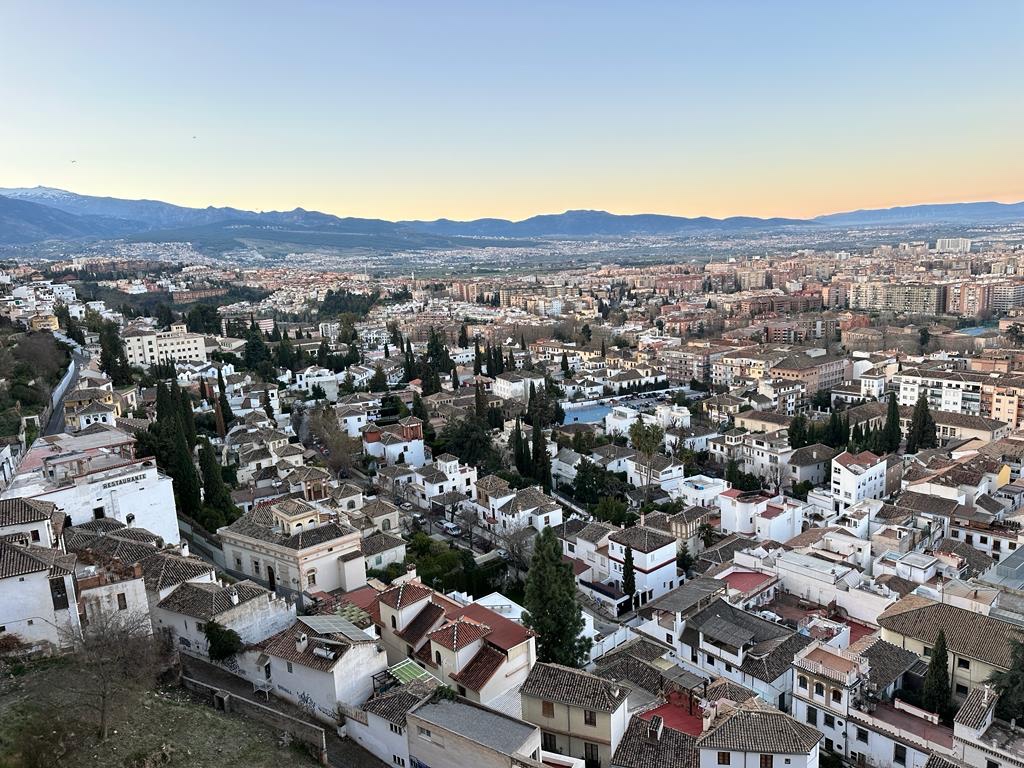
A walk into town (down the mountain) and then the bus up to Abadia del Sacromonte a tranquil 17th century Abbey on Mount Valparaiso with underground chapels and panoramic views.
The Abbey was built here as a result of finding relics and lead books which connected Granada with the birth of Christianity in Spain and where Saint Caescilius rests.
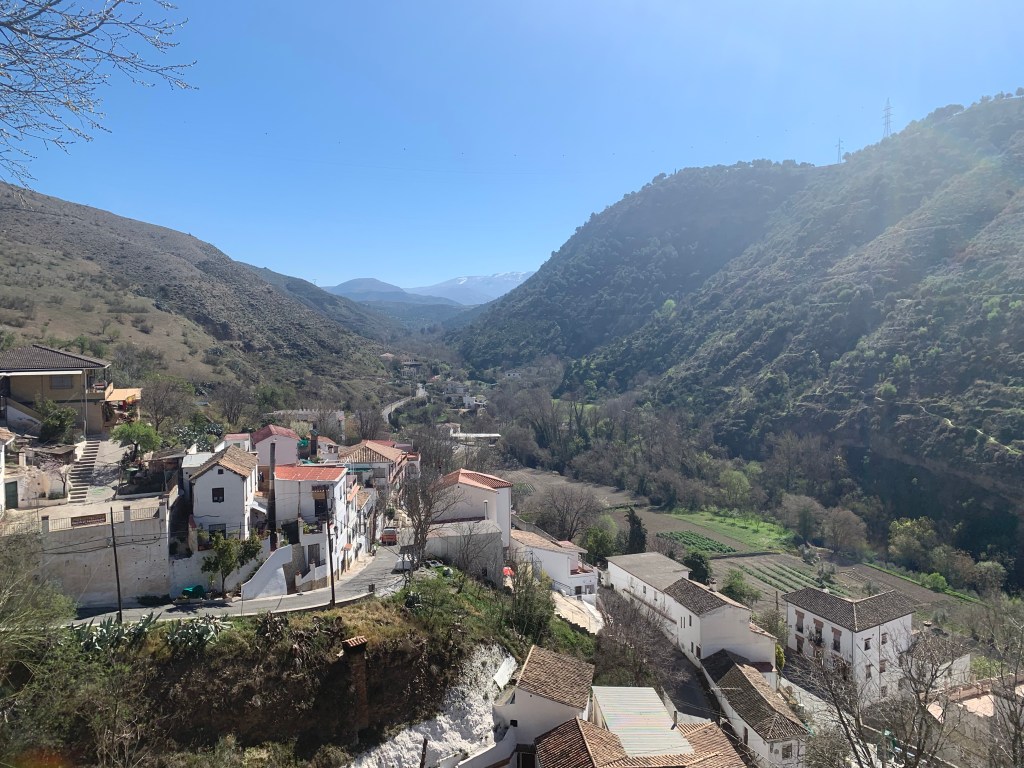
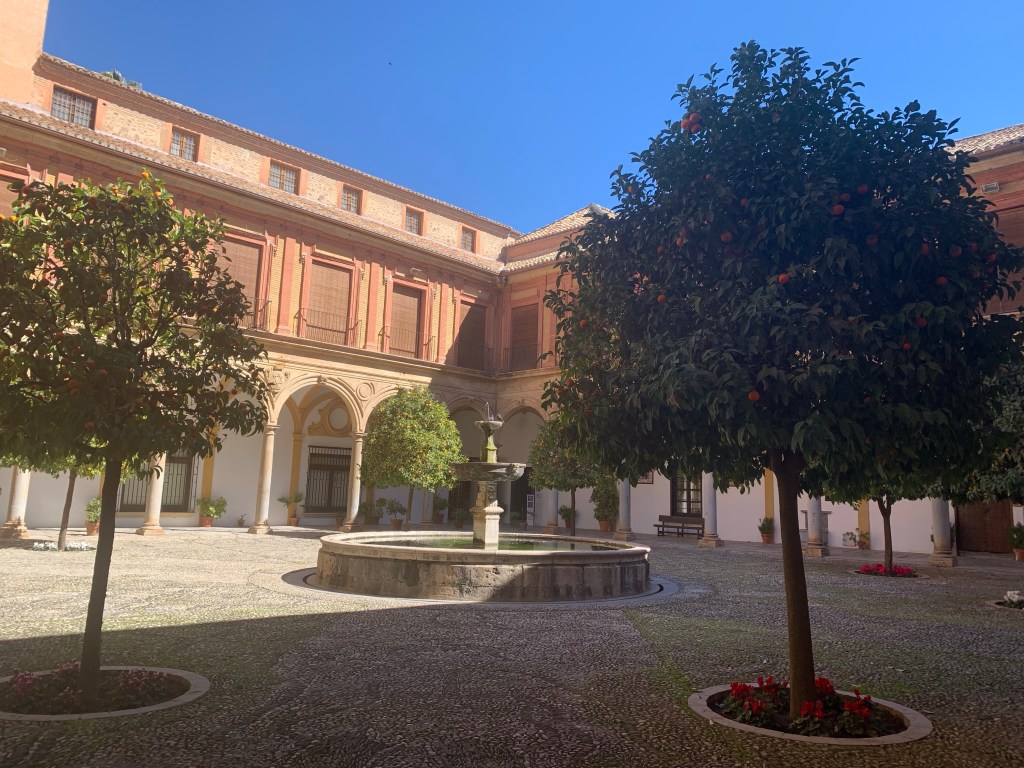
It is in the process of being restored and I can only imagine how beautiful it will be when finished.
There were a couple of things I really liked about this Abbey including the excellent audio that you can listen to on your phone.
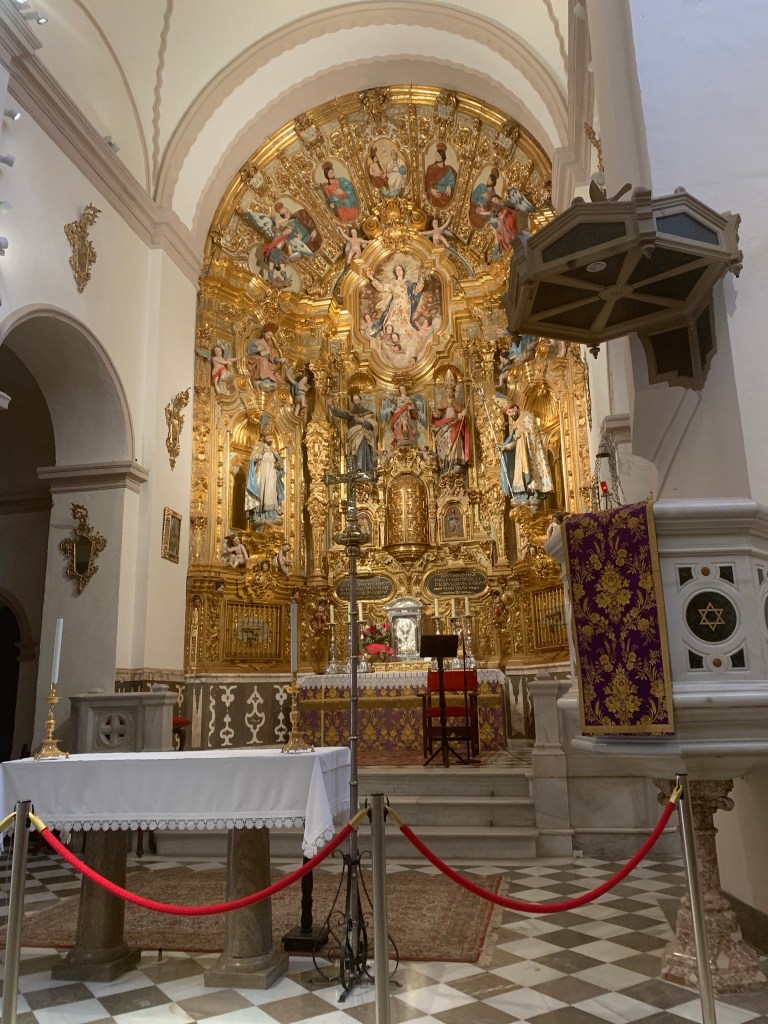
The collegiate church of the Abbey is quite beautiful with work completed on it’s building in 1610. There are a number of wonderful paintings in the church including the one below in the centre of the Immaculate conception.
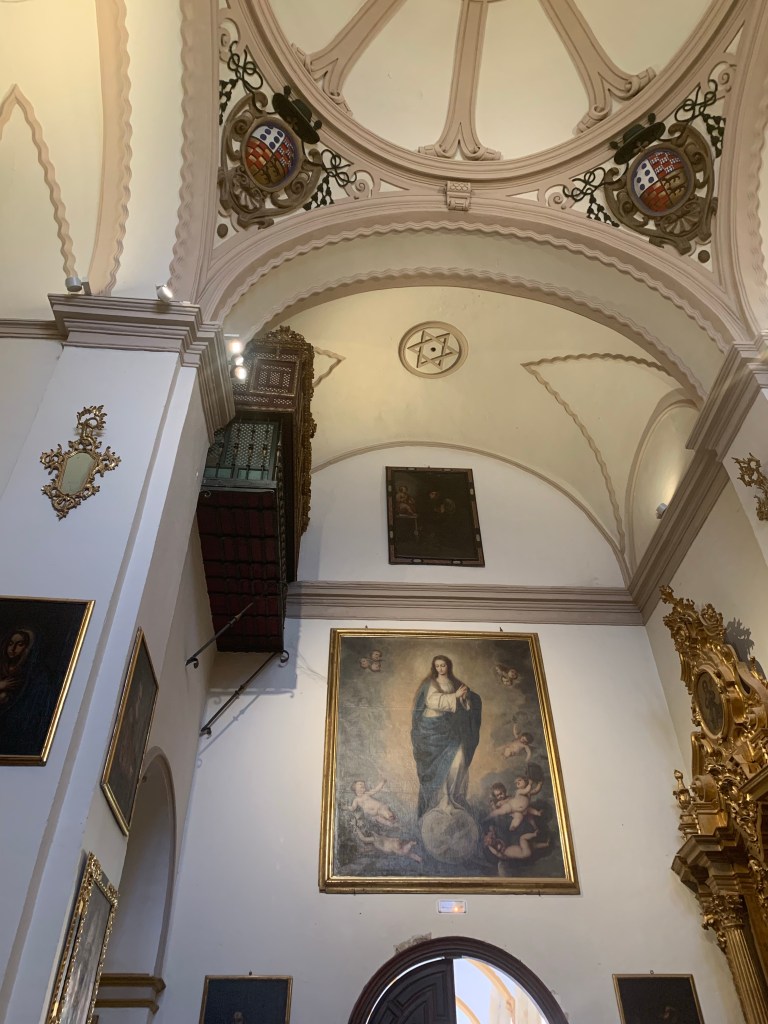
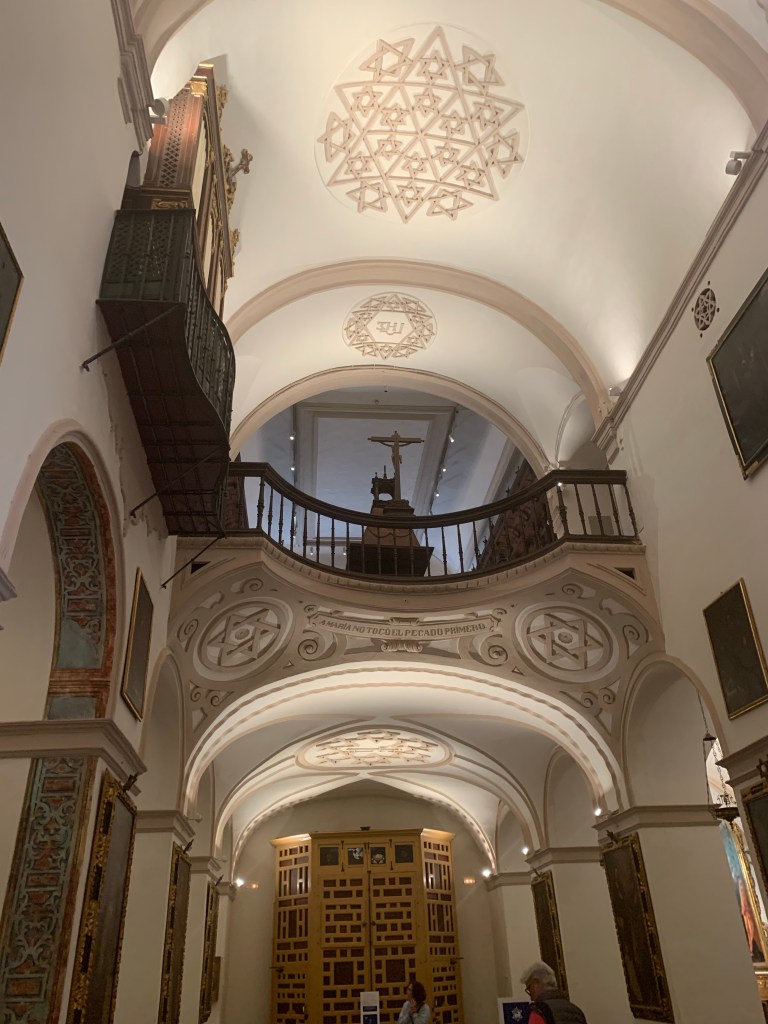
As you make your way to the Holy caves …
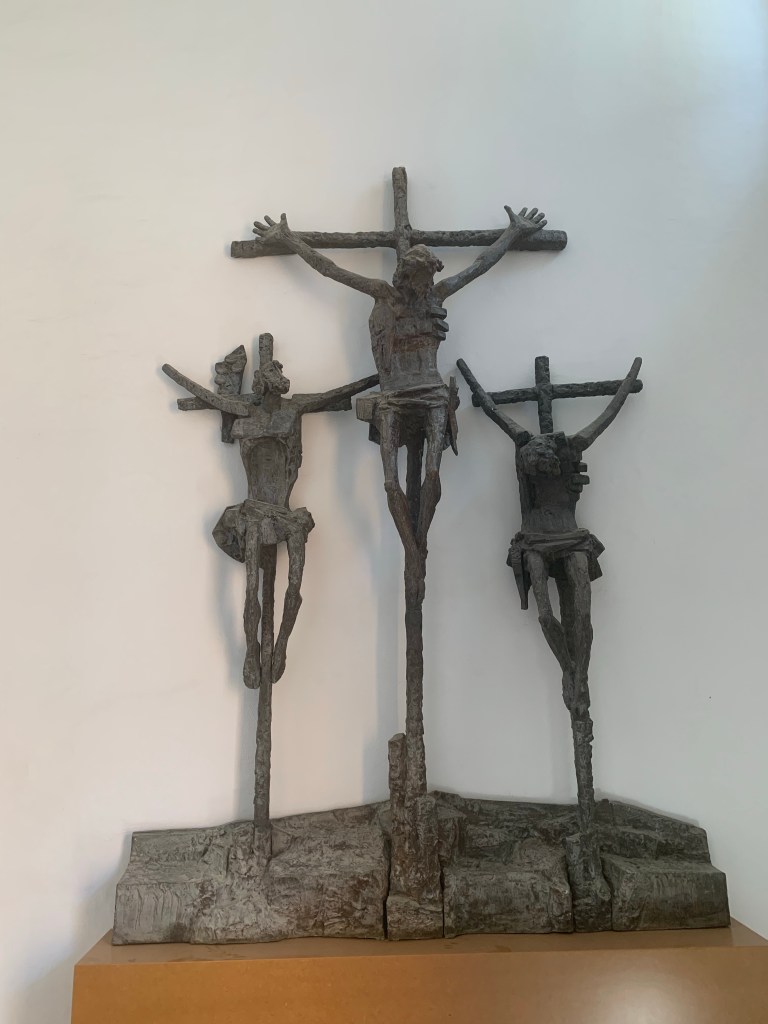
There are a series of extraordinary sculptures by Venancio Bianco. They are like nothing I’ve seen before. This is just one of many. I also loved the one of Saint Sebastian and the Last Supper – superb.
And the Holy caves
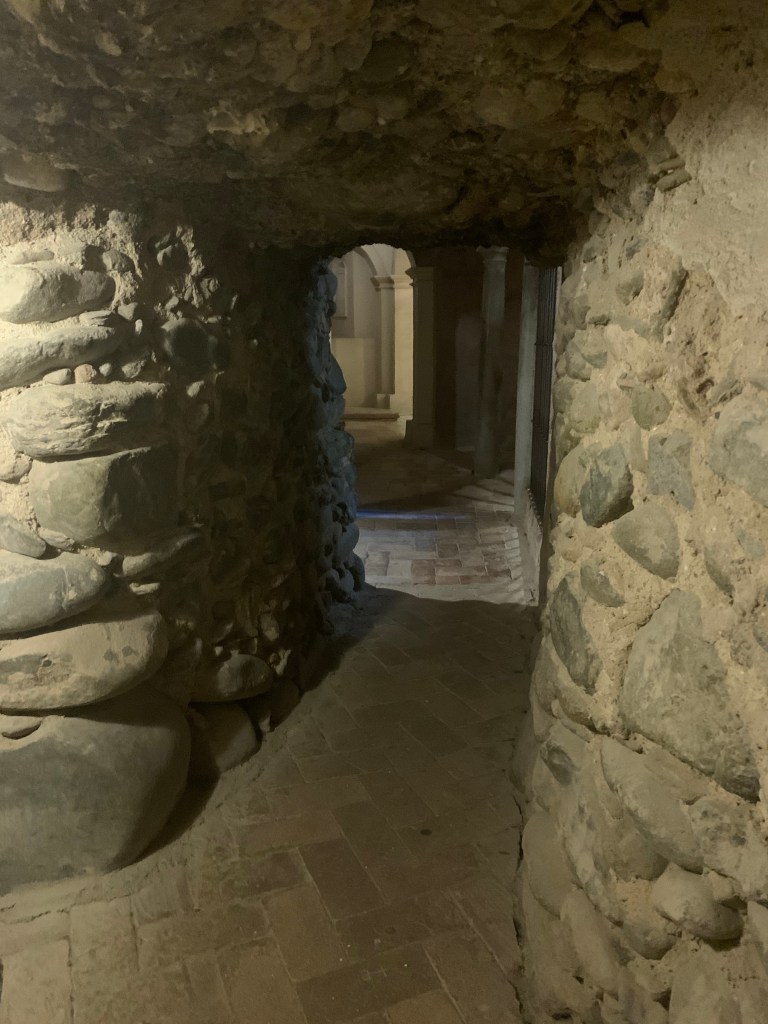
This is where the Lead Books and the remains of the first martyrs who evangelised this area were found. These caves are quite extraordinary, in years gone by pilgrims would pray before them. They are similar to the catacombs of the Roman era and were discovered at the end of the 16th century.
After coming out of the Holy caves you are directed to the permanent exhibitions that are available for viewing. There are a number of historical documents, stones and tapestries back to the 1500 and 1600’s, it really is an impressive collection.
It really was a worthwhile visit (by bus 😀 it’s very hilly remember).
Down the hill (by bus) stopping for lunch on the way and then onto another bus heading to Monasterio de La Cartuja (Monastery of La Cartuja) . We have been able to group some of the things we’ve seen together but there are a few outliers like the Abbey and the Monastery which has been fine given we have been here for a few days and we have the Granada Pass. Dave and Pip by the time we say adios to Granada will have seen almost everything included on the Granada Pass, Steve and I won’t have, but I feel like we’ve all got a really great sense of Granada and we all really like it.
The Monasterio is within the University precinct and so we sat on the bus with lots of students. Pip and I found it fascinating just sitting back watching and listening to the conversations in Spanish. The experience on the bus simply confirmed that people in Granada are like people in Canberra the only difference is the language.
The audio guide here is another beauty and follows the fascinating story of a layman of the brotherhood who had been exiled from Napoleon’s troops back in 1810, and who found his sanctuary within these very walls. His name was Friar Juan de Ubeda and he is with you throughout the Monasterio.
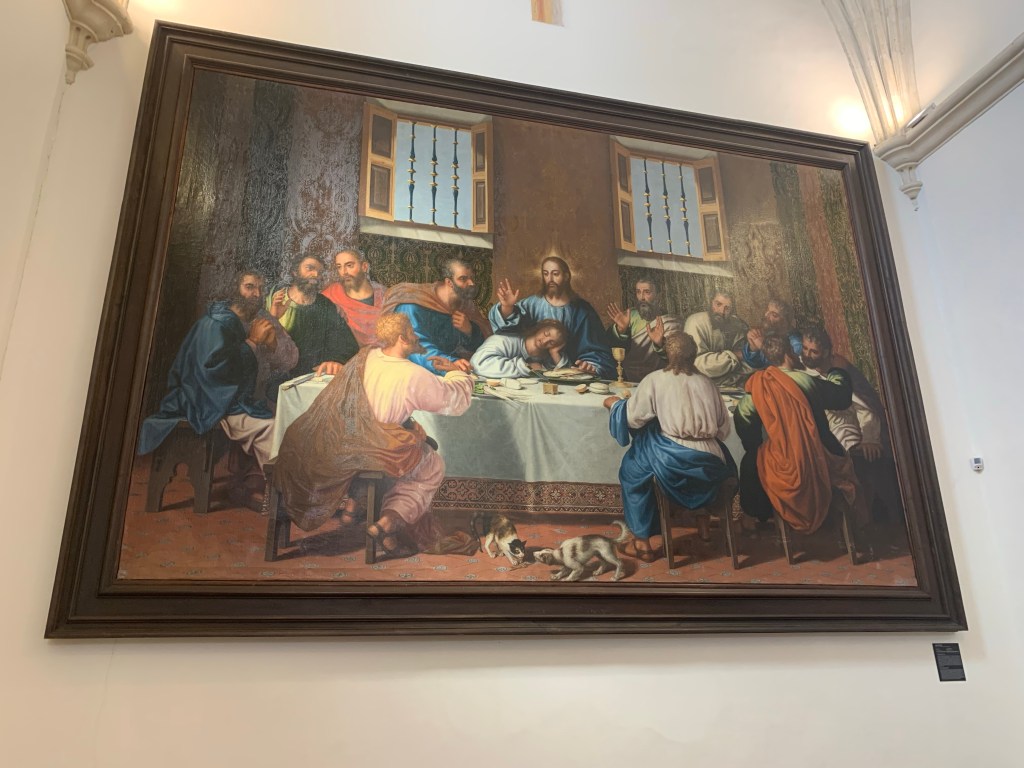
Many of the paintings in this beautiful Monasterio were created by Fray Juan Sanchez Cotan (1560 – 1627). Fray Cotan was already a renowned artist when he entered as a monk in 1603. As you stand in front of this at painting that takes up nearly a whole wall you notice that the flooring in the painting is the same as the refectory, as are the colours of the walls in this room, extraordinary. He has also added a dog and cat fighting for a scrap of fish connecting he reality of the painting to this refectory.
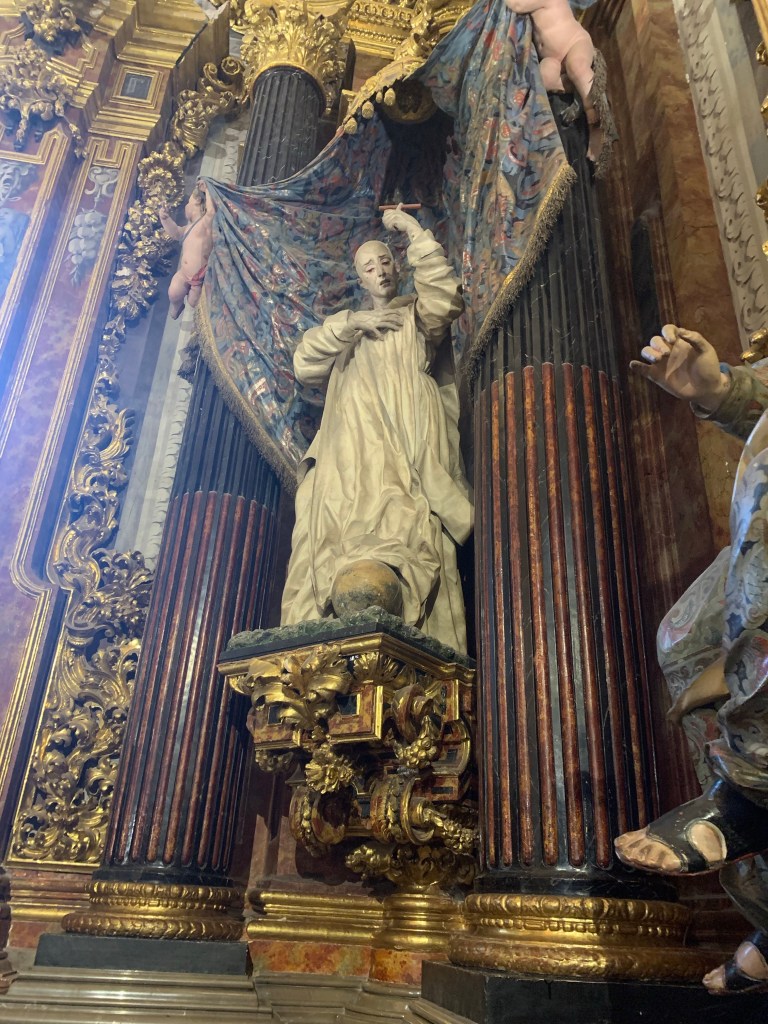
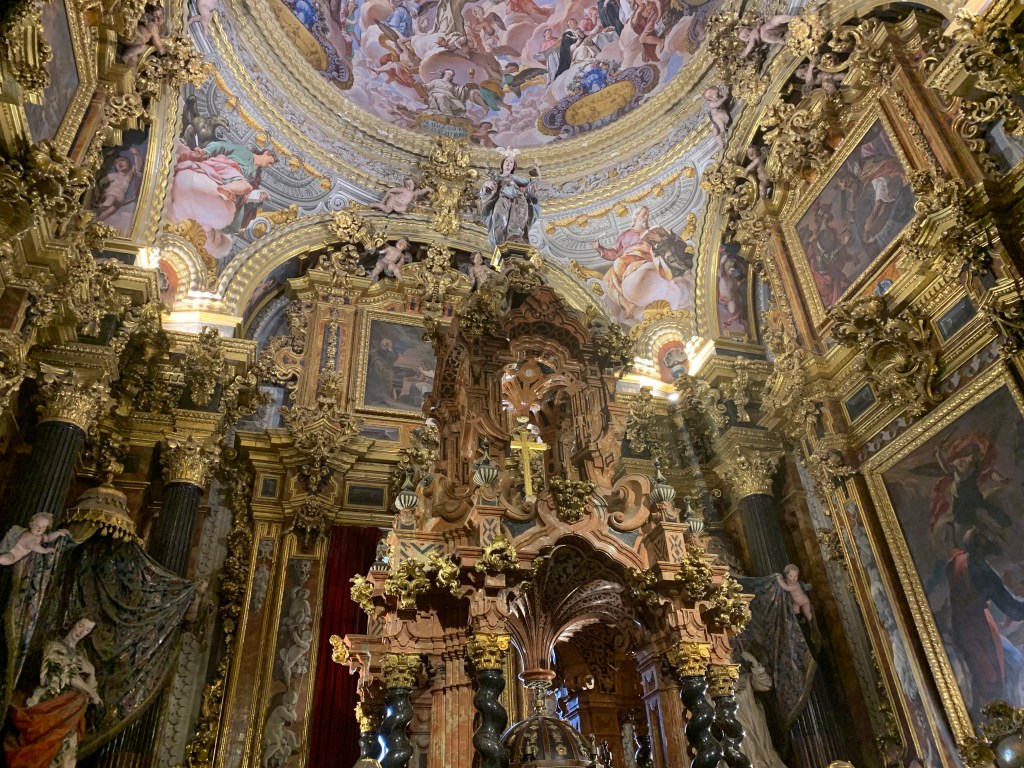
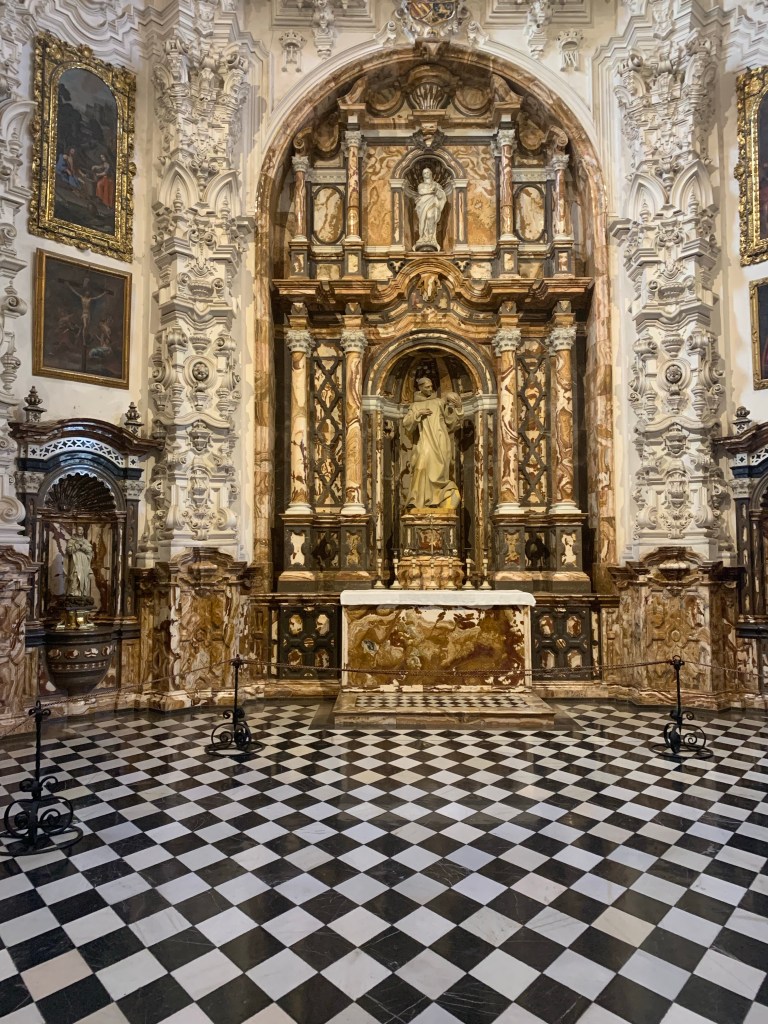
The church and side chapel are very grand with some unusual pieces. Lots of gold and colour in paintings and in the marble continue, and of course the beautiful tiling.
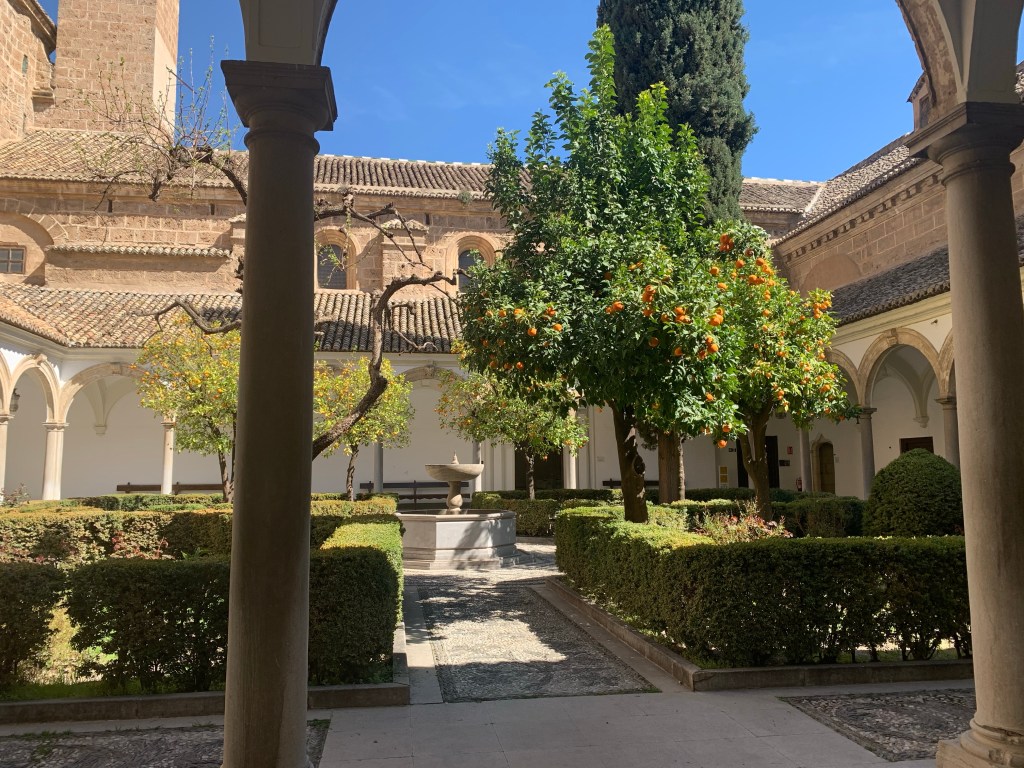
While I was sitting reflecting on this beautiful place I found myself staring at the orange trees in front of me and think I have neglected to make mention of them yet.
Throughout Spain you will see loads of orange trees planted but you never see anyone grabbing one from the tree to eat. There is an excellent reason for this and that is that the taste of these oranges is bitter and they are not eatable. So why so many, apparently there are 25,000 orange trees in Seville alone. The trees are planted everywhere for the orange blossom fragrance they give and to make marmalade ( yes someone goes around and picks them). We weren’t told this by our guide way back in Seville but after researching a bit I found that the oranges are apparently owned by each local council and so if you are caught nabbing an orange you could be fined. Yikes sorry officer no one told me may not cut it.
Tonight is over final night in Granada and tomorrow morning we are bound for Barcelona on the train, it will take a bit over 6 hours. Given that it’s our last our final walk down the hill for pizza and beer then back up the hill on the bus.
There is so much to see here, another fantastic Spanish city to visit with its very own Frank Sinatra song.

 Travelling with Fi
Leave a comment