It seemed entirely appropriate that today we would be visiting the original capital of Spain, Toledo, as we had heard a little about it yesterday during our Madrid walking tour.
Rather than working out the public transport for the hour long journey to Toledo we decided to jump on a semi organised tour which included a short walking tour through Toledo. As we got close to Toledo I was reminded why we don’t often take these. Yes we were subjected to the customary stop in a shop where we were herded into see a presentation and then to buy the goods … of course there is no obligation.
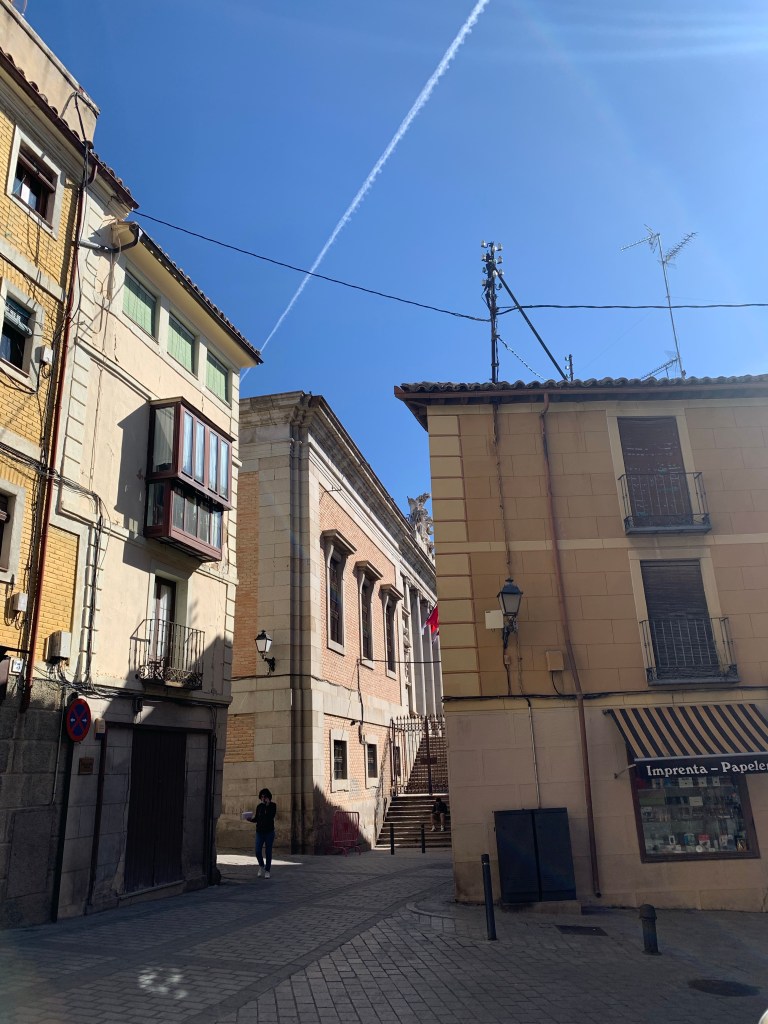
Having survived this little detour, onward to the ‘old city’ of Toledo. It sits up on top of a hill, with a great view of the surrounding land – an excellent spot to build a protected capital.

Toledo reeks its 2000 years of history which dates back to the Romans, then the Visigothic Kingdom (the Kingdom of the Goths) during the 5th to the 8th century and then of course the Emirate of Cordoba. You are surrounded by the beautiful Moorish /Roman and more contemporary architecture as you weave your way on the steep, windy and cobblestoned paths built to confuse invaders.

The history of Toledo is really a little brutal (which I know isn’t unusual) with a series of councils who at different times excommunicated, used ritual humiliation and the scalping of rebel dukes as ways of making its citizens comply. All a bit yuck really, I’ve been reminded over the last few weeks that the history of the human race has been pretty bleak. It’s all about power and protection of self.
Once the walking tour finishes there isn’t a lot of time and so we have to race through Toledo which is not ideal, you really need to stay overnight to do this place justice.

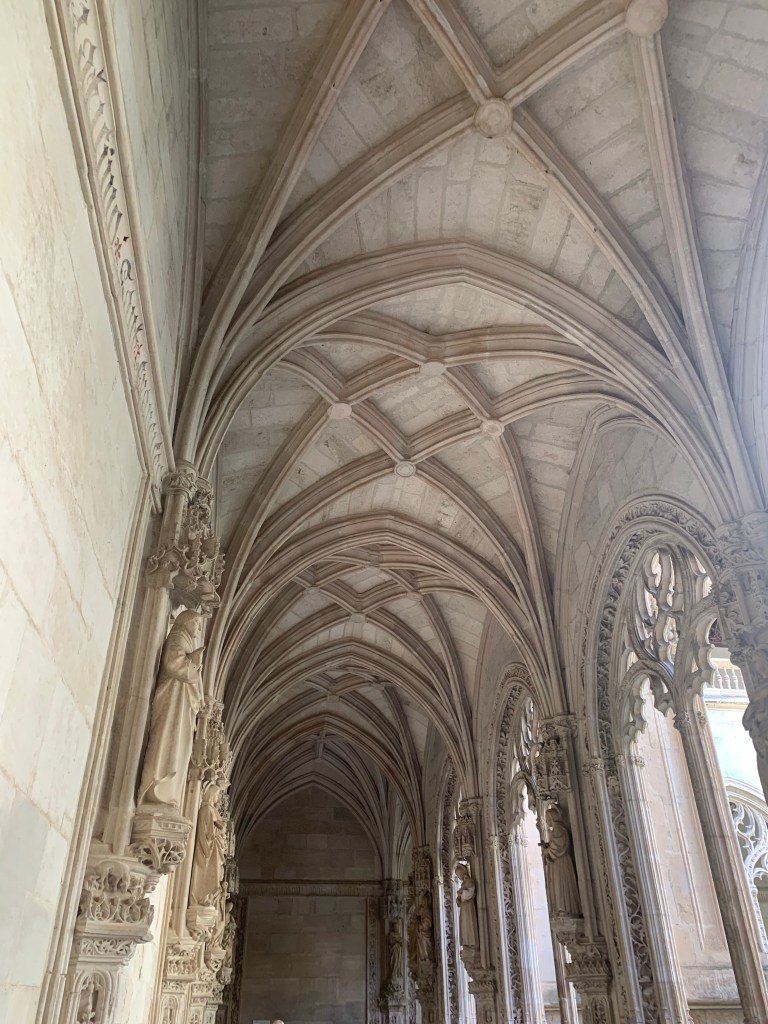
Our first stop is the monastery and it is simply beautiful. The Monastery of San Juan de los Reyes was built by the Catholic monarchs (King Ferdinand II of Aragon and Queen Isabella I of Castile) between 1477 – 1504. It’s dedicated to Saint John the Evangelist. Toledo was chosen as the site because of its central location and of course at the time it was indeed the capital of Spain.
Sadly it was badly damaged in 1809 by Napoleons troops. Restoration began in 1883 but not completed until 1967, yes more than 80 years.
Our guide had let us know that Toledo had hit hard times once the capital moved to Madrid, and that locals are very thankful for the interest that is being shown now in the city. It sounds like it was almost forgotten for generations and so the tourist dollar means that funds continue to flow into the city.
Despite that it is very much a religious town, with cloistered nuns in Toledo apparently they make a mean biscuit. These nuns have rejected the distractions of the external world instead have a life of prayer, self reflection, charity and are strictly silent.




It was great to see some of the pesos being put together for the Easter processions.
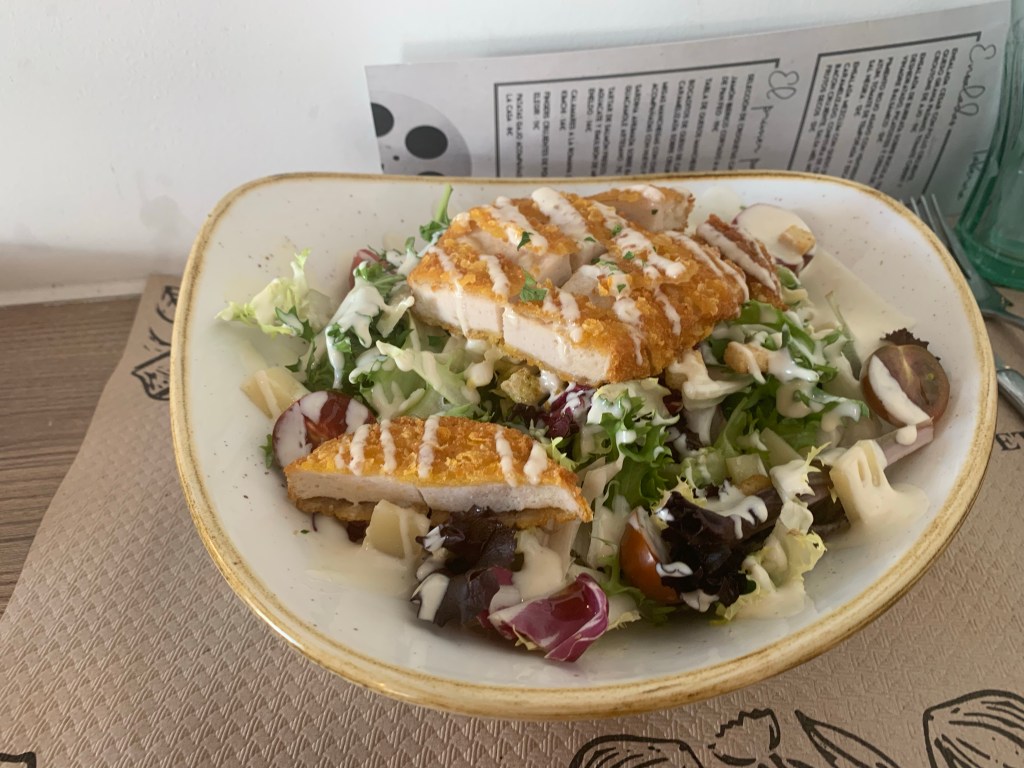
And lovely lunch at a very cool little restaurant


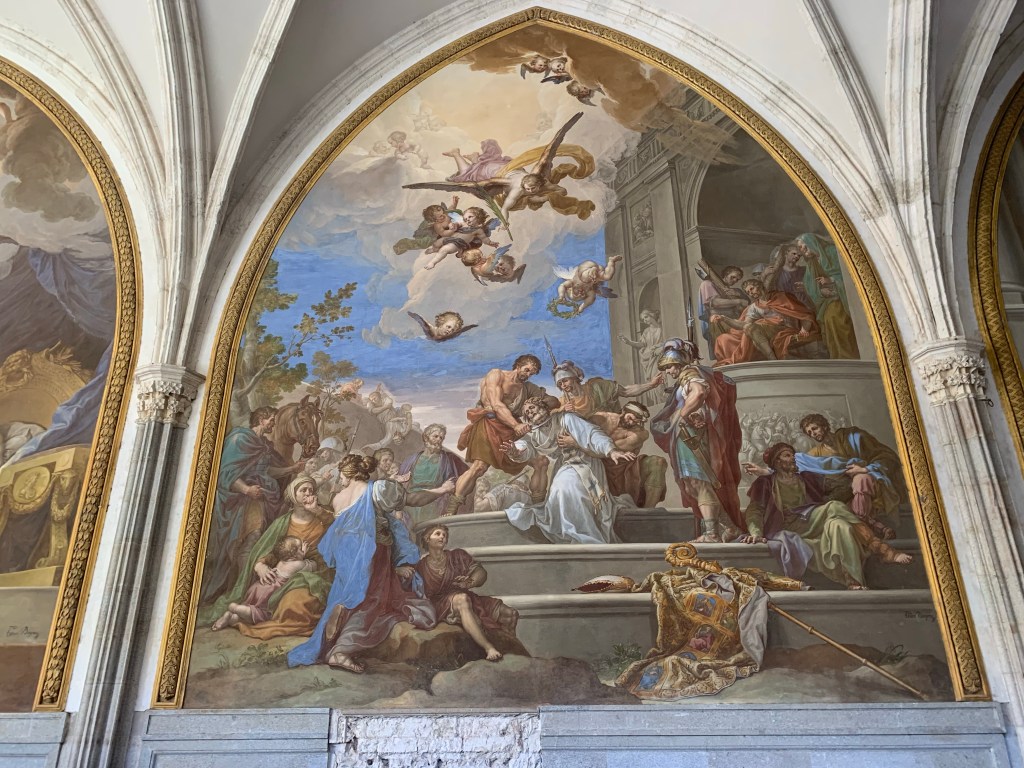
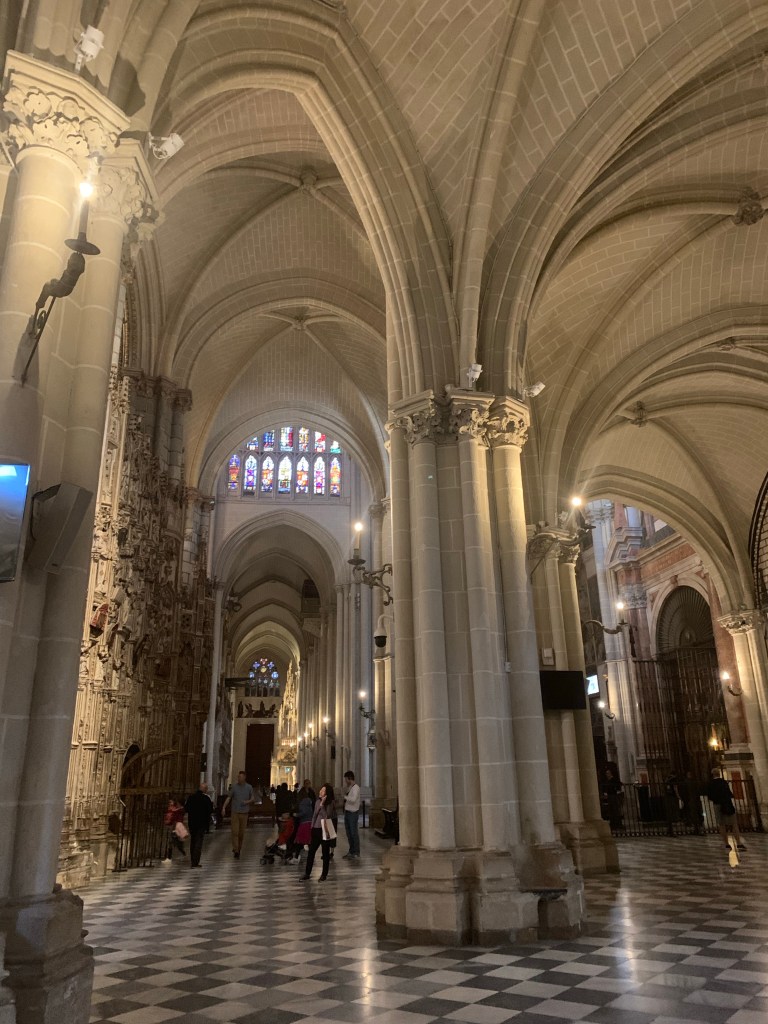
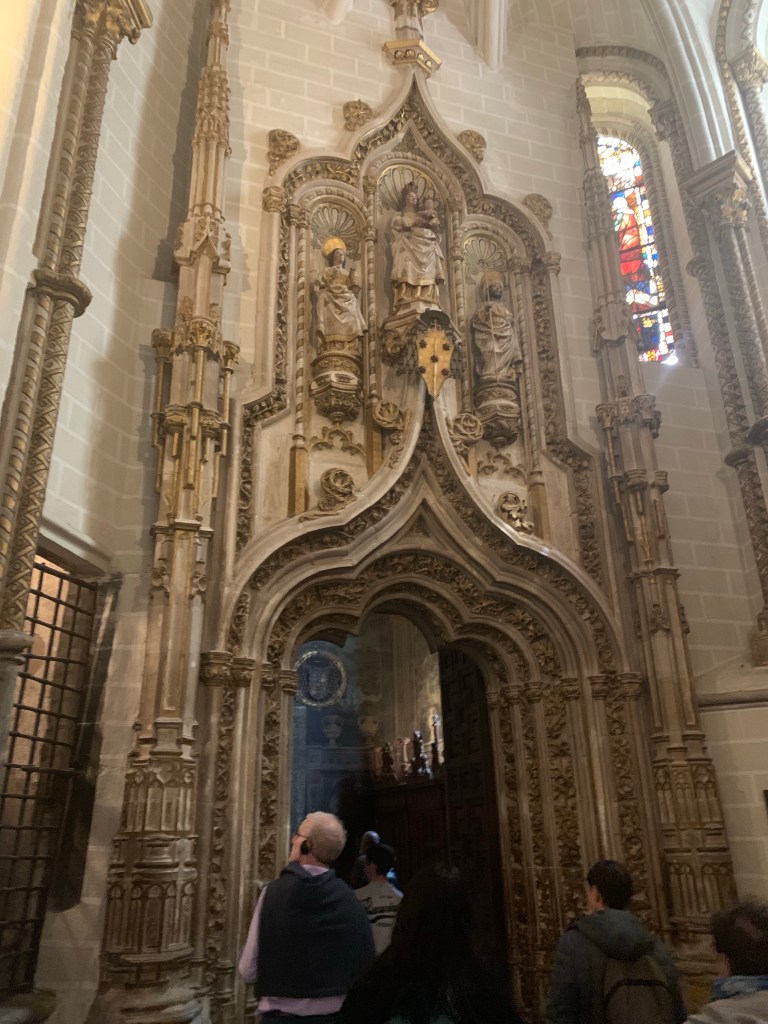
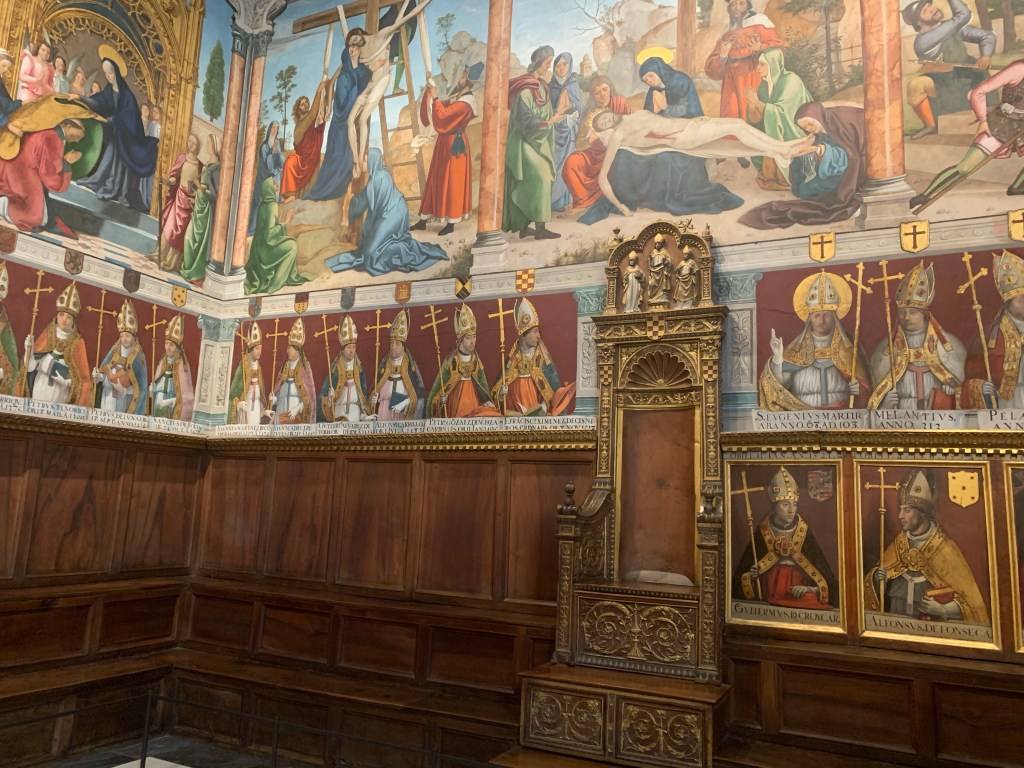
And then to the main game in town the Cathedral, this is the most important cathedral in all of Spain as it is the designated primate cathedral. On one of the pillars in the rear of the Cathedral there is an inscription that reads
In the name of the Lord the Church of Saint Mary was consecrated Catholic, the first day of the ides of April, in the joyful first year of the reign of our most glorious king Flavius Reccared, Era 625. [13 of April of 587].
The Muslim invasion a couple of centuries later didn’t eliminate the Christian presence and this church remained, but was reestablished in the name of the Church of Saint Mary of Alfizen.
When the city was reconquered by Alfonso VI in 1085 one of the main points for the Muslim communities lack of resistance was the kings promise to conserve and respect their institutes of higher learning as well as the customs and religion of the Muslim population which had coexisted for centuries. The preservation of the main mosque (todays Cathedral) was integral to the compromise.
Unfortunately the King had to depart on matters of state and his wife and the Abbott of the monastery (who had been promoted to Archbishop) disregarded this promise and made a decision to seize the mosque by force. Into the mosque they installed a provisional altar and hung a bell in the minaret – ‘to cast out the filthiness of the law of Mohammed”. King Alfonso was so angry upon his return that he ordered the execution of all participants. Legend has it that a local Muslim negotiator, Ali Walid was responsible for restoring peace and implored the king to show mercy and begged his own community to accept the Christians in their community. As a gesture of gratitude it was agreed that Walid’s effigy would be placed on a pillar in the main chapel.

The Mosque/Cathedral remained in tact until the 13th century.
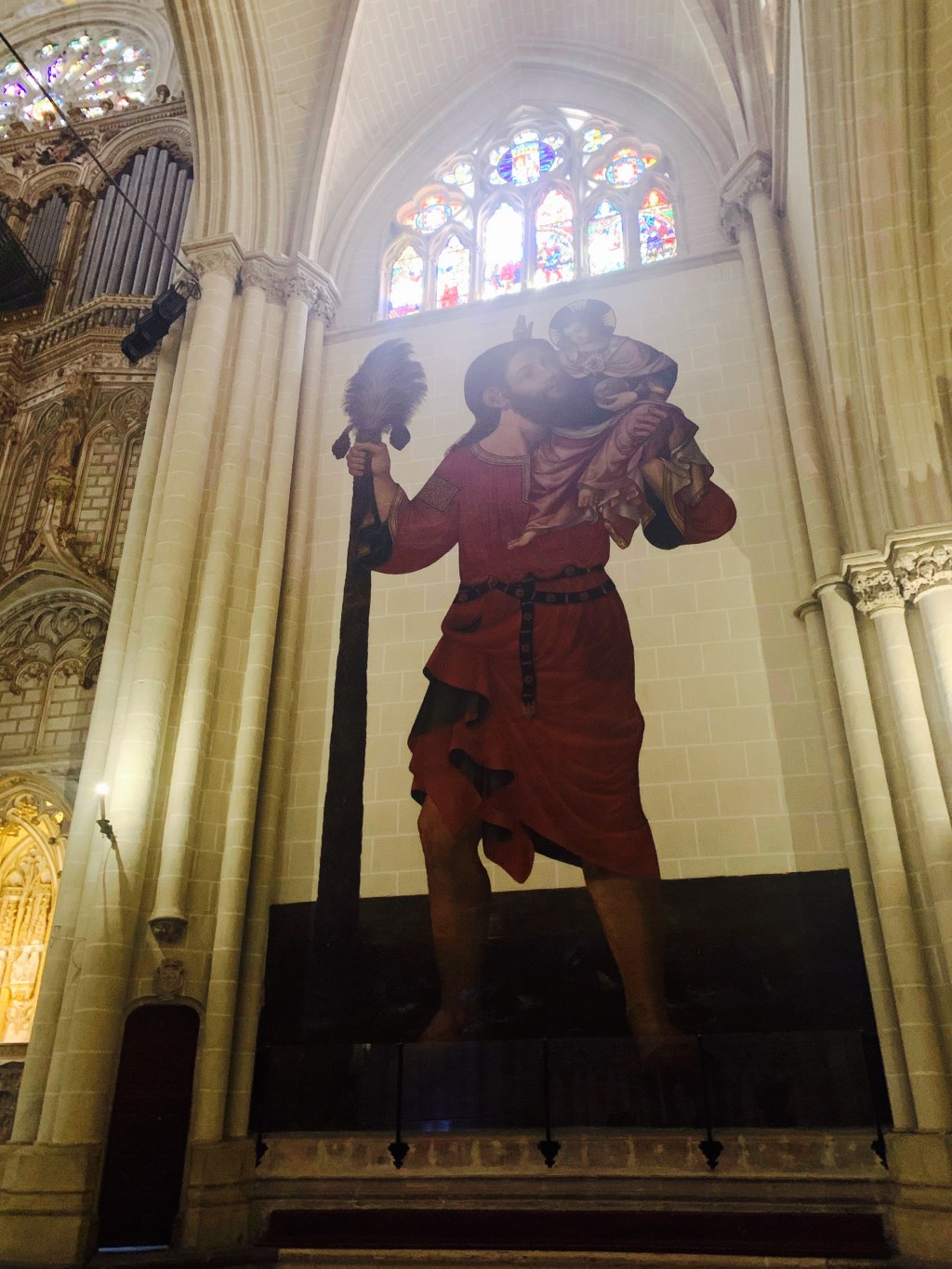
It is huge, really interesting and very beautiful, perhaps even elegant, and there is even a giant (see picture below) and has an excellent audio guide, sadly we simply didn’t have enough time to go through it all as you need a few hours. I know I’ve got form now and do take my time but I wasn’t the only one of our group who struggled with this one, I promise.





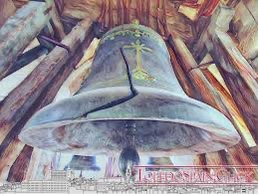
It s equally spectacular outside and has nine bells, with the mama (fat) bell being one of the biggest in the world – I know amazing right. So how does it sound, well unfortunately we won’t hear it today (or ever). The reason is quite simple the people here care, they are such sensitive and thoughtful people that the bell isn’t rung because of the fear of earthquakes occurring, labour being induced in pregnant women or glasses shattering… it has nothing to do with that awful rumour that it is broken, and that the breakage occurred the second time the bell tolled.
Before we knew it it was time to jump on the bus back to Madrid. There was so much more to see in Toledo next time I guess.
A big day and then a big night. Tonight we had the opportunity to watch the whole Easter procession. I think for me the best part was watching the crowd and the pride on their faces young, old and in between. Chatting with a couple of people in the crowd they were so excited that people from the other side of the world had the opportunity to be part of this annual event. And I guess the pandemic meant that there were a few years where the procession wasn’t able to occur. I was even given a little card with the details of the local Catholic Church just in case I was interested.


Oh and yes the title of my post comes from one of the many songs about Toledo (well mostly Toledo, Ohio) … this one of a song by Javier Solis not to be confused with the Elvis Costello version of a different song with the same title.

 Travelling with Fi
Leave a comment