Okay so when people talk about Amsterdam it’s often about the canals, the tulips and even the special cookies. It’s not really about the number of bicycles and riders and it should be. In Amsterdam it is all about the bicycle. They are everywhere and it appears that they always have right of way.
We have been back in Europe for a few weeks now. We are more acclimatised to looking anxiously both ways for cars, trams and trucks. We always have an underlying sense of anxiousness that we should be looking the other way. Today it is look both ways at least twice for the cyclist. They are coming to get you from every direction. I know that this isn’t true but it is kinda how it feels. So far so good, no accidents but it does feel inevitable that at some point there will be a tangle. A couple of things differentiate cyclists here from those in Australia. Helmets aren’t required. Perhaps there aren’t lots of accidents. Don’t expect to see Lycra – bonus. Finally, the bicycles aren’t state of the art machines. They are banged up Malvern stars. I can completely appreciate why cycling is the best way to get around here. If I lived here, I might be a convert. I would put aside my childhood fear of the bicycle.

Today we are walking very diligently (to avoid a bingle) to the end of the street. We are going to visit our first museum here in Amsterdam. We had pre purchased tickets here, we did for tomorrow’s museum as well.
The Rikjsmuseum and it’s a beauty. The Rikjsmuseum is the National museum of the Netherlands. It’s all about Dutch arts and history with a huge collection. This museum was originally in The Hague and was moved to Amsterdam in 1808.

This museum’s former identity was a royal palace and is the perfect environment to showcase this nation’s greatest art.
I could have spent days exploring this place. I do hope that I can come back again to visit. It has a beautiful open feel to it and the perfect place to sit and watch the world go by.
Where to start…
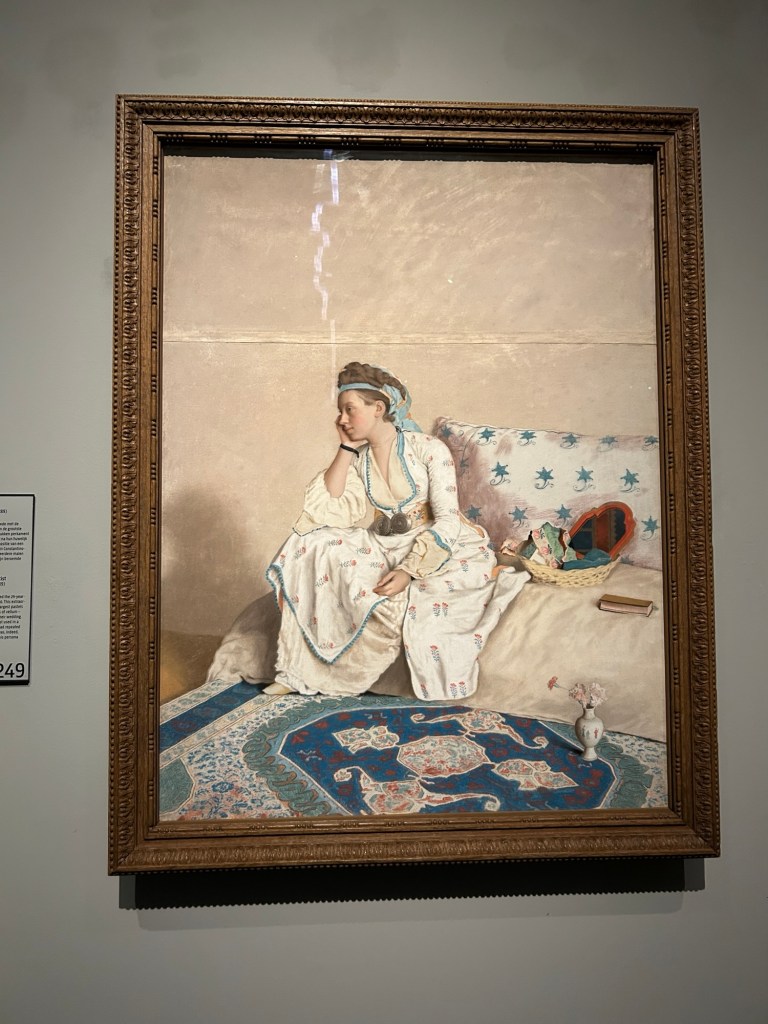
This magnificent painting was painted by Jean-Etienne Liotard and is one of his largest pastel pieces. Liotard was 54 when he married 29-year-old Marie Fargues. It is believed he painted this just after their wedding.

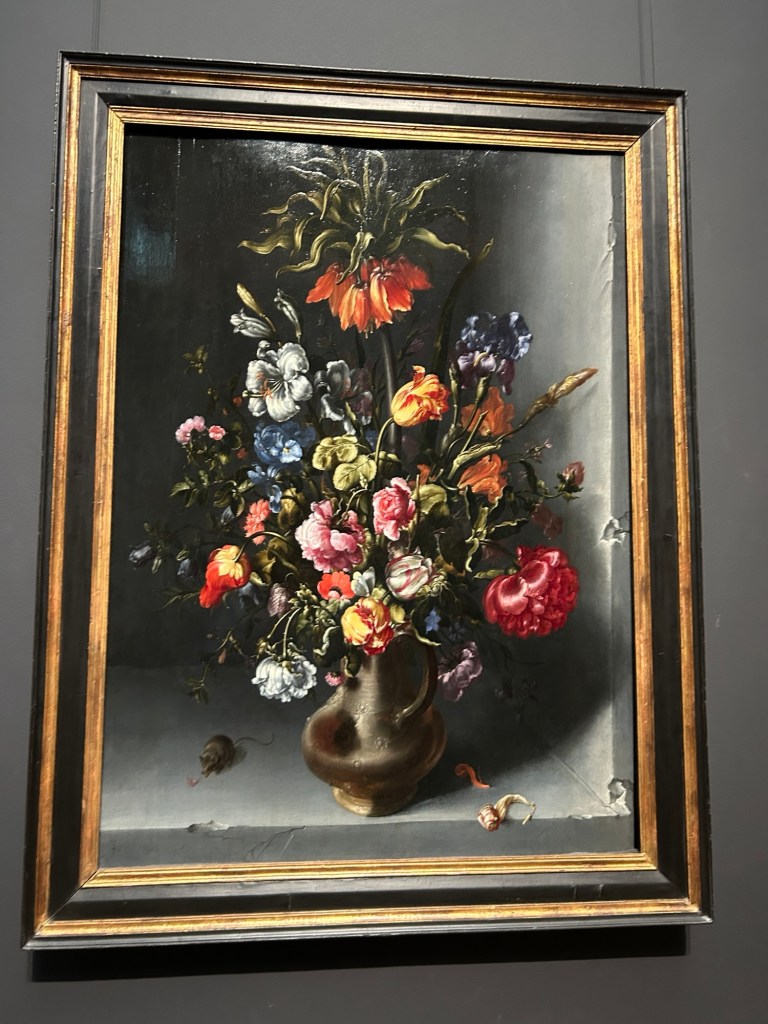
Still life paintings of flowers are considered a typical Dutch genre. This is one of the first and it is exquisite.
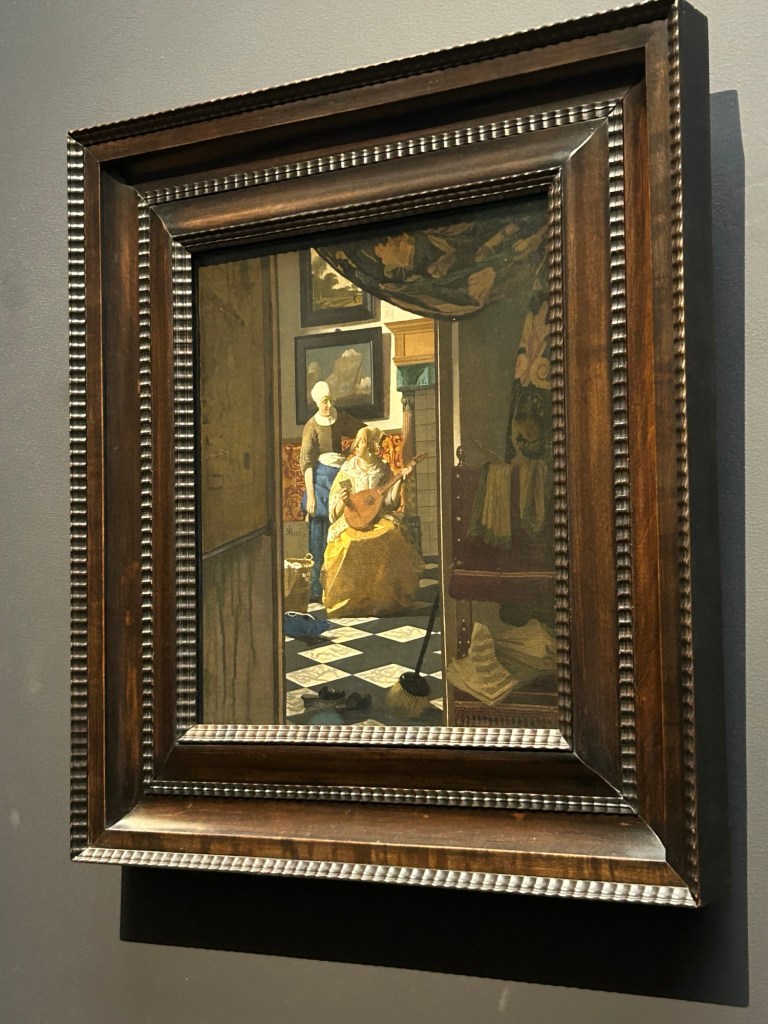
The Love letter is a 17th century painting by Jan Vermeer. I hadn’t seen this one before but had seen his equally beautiful painting The Milkmaid. The painting shows a servant maid commenting to her mistress about a letter the woman holds. It is such a beautiful piece with lots of hidden meanings. For instance the musical instrument that the woman holds signals that this painting is about love. Vermeer has placed several items right at the front of the painting. This makes you feel like you are “intruders in an intimacy”. Totally fascinating. And this is just the start when you are in Amsterdam, make sure you visit this painting.
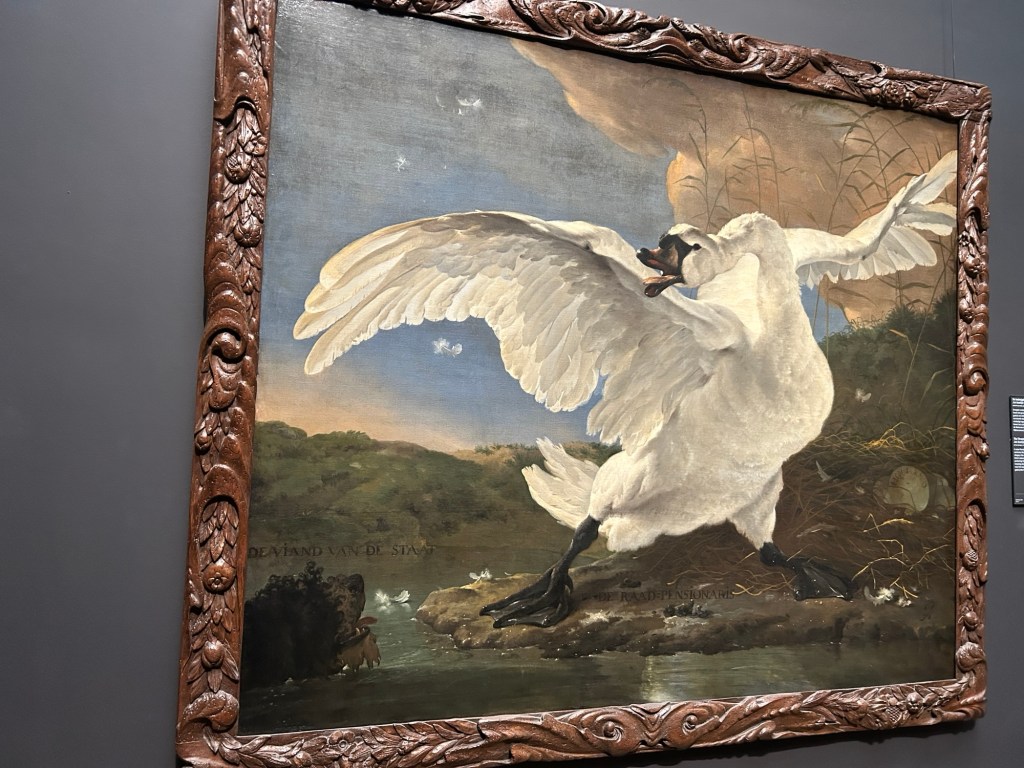
A threatened swan defending its nest against a dog.
One of the most famous paintings here at Rijkmuseum is the Night Watch by Rembrandt Harmenszoon van Rijn (1606-1669). There is work underway (hence the scaffolding) with conservators removing the old varnish layers from the painting. I look forward to coming back when the scaffolding is gone :).

The Rijkmuseum’s art historical library is one of the largest of its kind in the Netherlands. The library has remained the same since its 1881 completion. It is so beautiful and my happy place.
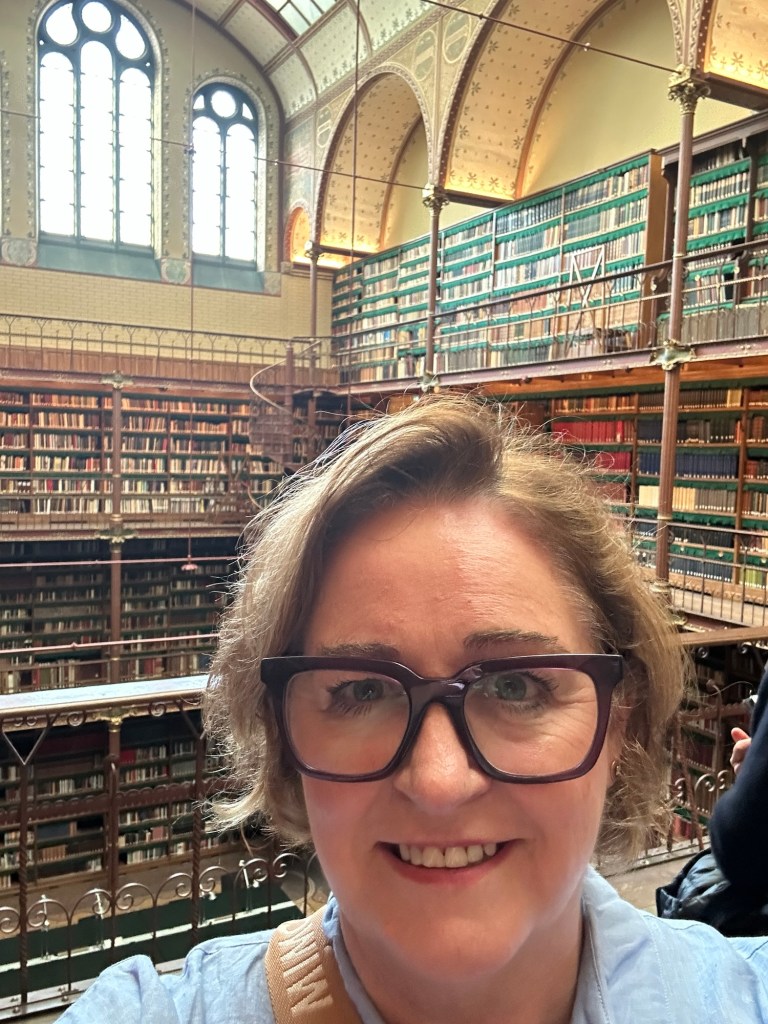
There is so many more paintings, dolls houses (divine), model ships, armoury, furniture and statues. Perhaps I’ll do a post on this place alone. The works go from 1100 – through to now, its very comprehensive.

We stop for lunch at a great place called Soup Enzo. We have a little wander before we embark on a canal cruise.

You can travel for 100 kilometres on the canals of Amsterdam. There are 165 canals in this city that is only 15 kilometres across, the math doesn’t right does it? The three main canals were dug in the 17th century and are each listed as UNESCO World Heritage sites.
The houseboats – they vary in colour, size and upkeep. Here is a small collection:


There are more than 2,500 floating homes on the Amsterdam canals. The canals themselves are filled with bicycles. It is estimated that each year 15,000 end up under water.
It’s not be obvious from the photos. But some of the tall skinny houses on the shores are tilting a little. For those built in medieval times, a forward leaning facade was mandatory. This was the case until the early 1900s and was about protecting lower floors during heavy rainfall – ingenious. I’m not sure about those that are tilting left or right. I am sure that someone is keeping an eye on this.
A canal cruise is a great way of exploring Amsterdam and hearing more about the history of this lovely city. And I guess you could hire a bicycle !

 Travelling with Fi
Leave a comment