We have left the Canberra cold to the beauty of Europe in summer. Our first stop is Denmark and its capital – boy it sure doesn’t disappoint.
We only have three days here and so there is no time to waste! Steve wrangles the closest ticket machine and we find our way to central Copenhagen. The train station is less than a 10 minute walk from our really lovely and central hotel, the Wide Hotel. As we have arrived at the hotel so early – it’s just after 8.00 am we decide on a walking tour of the city. This is a great hotel – the rooms are a great size and location is excellent!
There is a lot to see and thankfully it is such an easy city to get around. Most of the big attractions are within walking distance of our hotel. I will confess. I can see that these tired legs may need a couple of metro trips 😂 in my future. What can I say? Australia is a long way away from Denmark.
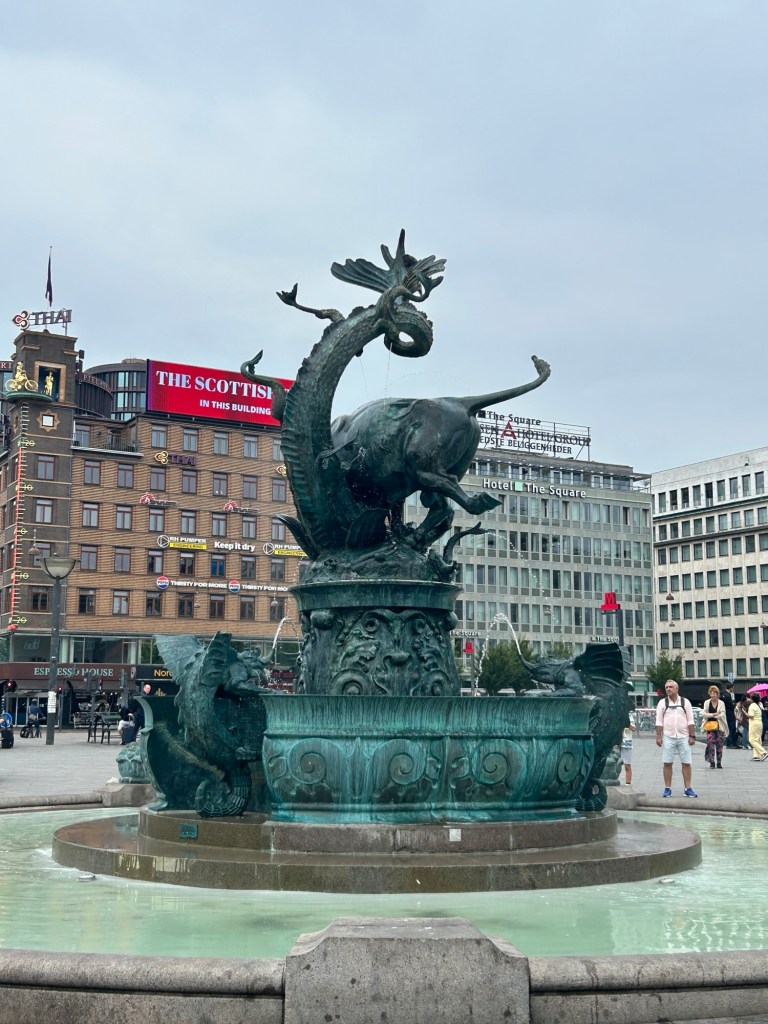
On our way to meet with our tour, we walk through a large square. We pass a magnificent fountain just outside city hall. The fountain takes pride of place and you can’t help but be drawn to it. It is of a bull battling a dragon. OMG imagine living somewhere so fabulous that this is the fountain you select for a major meeting place. Yes, it’s oh so very cool. I know from this moment that I am falling in love with this place.
The tour selected is called the Politically Incorrect Tour of Copenhagen. It helps give us a sense of where most of the tourist spots are.. It also highlights the tourist traps, including the famous Little Mermaid, as well as places to eat and drink beer. If you are looking for the history of Copenhagen this is probably not the tour for you. The tour was irreverent and quirky. It weirdly focused on the rivalry between the Danish and the Swedish. Silly me, I didn’t realize that was a “thing”. More on that later.
We are a diverse group of about 25 people. We were the only Australians on the tour. Steen, our tour guide, delighted in saying something about each of the countries represented on the tour. I was thrilled to hear that female Australians are just a little bit scary – how fabulous, you go Mary!
Now onto the tour. Stone Age settlements existed in this area, as evidenced by archaeology digs. Some historians believe Copenhagen was founded in the late Viking Age by Sweyn I Forkbeard. Forkbeard is most famous as he was the first Viking to be named King of England. He reigned for five weeks, late 1013 to early 1014. Forkbeard was famously known for his conquests, his beard and his hair which remained fabulously immaculate even in battle. Wow – that is very impressive. His son was the famous Cnut the Great. A source I’m travelling with reliably informs me that Cnut has his own currency and more recently the British Royal Mint struck a commemorative coin marking 1,000 years since his coronation… this is after King Arthur for those playing at home. He also featured in Viking Valhalla, so I am told.
But it is actually Bishop Absalon (1128 – 1201) who is credited with establishing the foundation for modern Copenhagen. He played a significant role in its development. He was described as colourful and powerful, a holy man, warrior and advisor to the King.
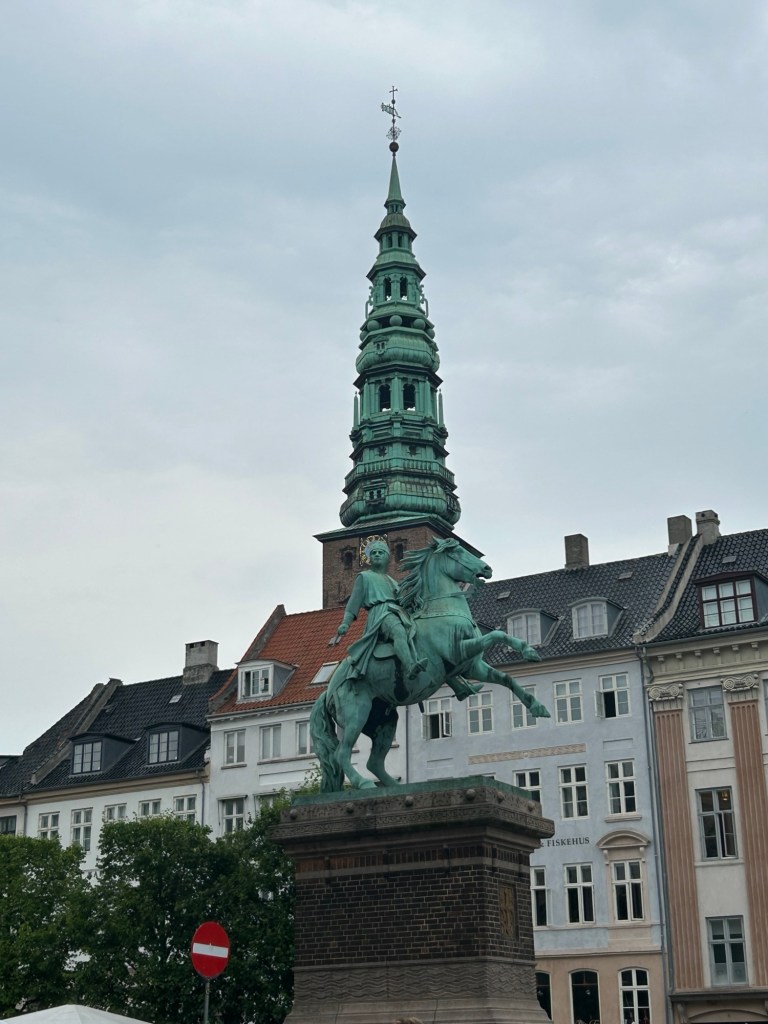
This beautiful city soared through the ages. It transitioned from a fishing village to being named the capital of Denmark in the 15th century.
One of the first places we visit is Christiansborg Palace. This impressive building was once where the Royal Family lived. It now houses the Danish Parliament and Supreme Court of Denmark. At this point Steen mentions that Copenhagen is a city renowned for its devastating fires. These fires have ravaged this pretty city throughout the centuries. This palace has seen six, yes six iterations due to fires. The first palace was built in the baroque style (1733 – 1794). The second was designed in French Empire style (1803 – 1884). Unfortunately, it was never really occupied before it caught on fire, and so on. In 1907 following an architectural competition work started on the palace in Neo-baroque style.
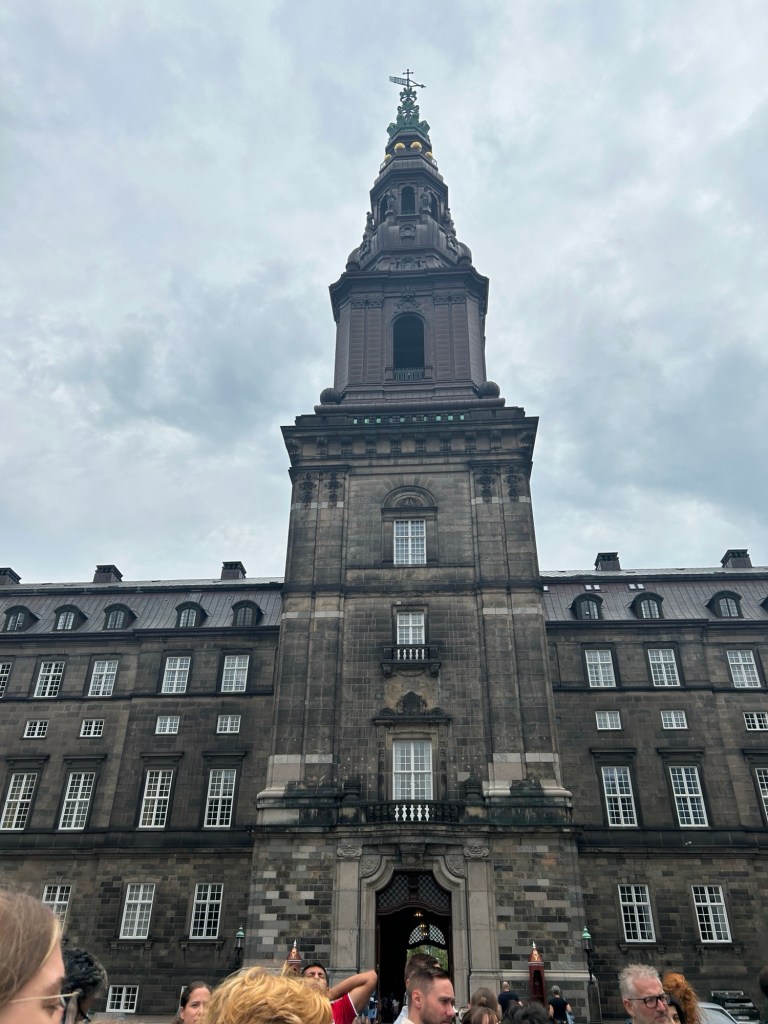
It would seem that fires play a huge part in the history of Copenhagen. In 1728, almost 30 percent of the city was destroyed leaving 20 percent of the population was left homeless. There was another major fire in 1797 and again in 1807. At this point, a decision was made. Houses would no longer be timber framed. House corners at intersections should be diagonal and streets were straightened so that the fire engines’ long ladders could navigate streets more easily.
As our tour had a politically incorrect nature. There may have been talk about the possible ties between these unfortunate events and hygge. Hygge is all about coziness, comfort, and the occasional candle burning to find happiness in everyday life…. where there is a candle there is a flame.
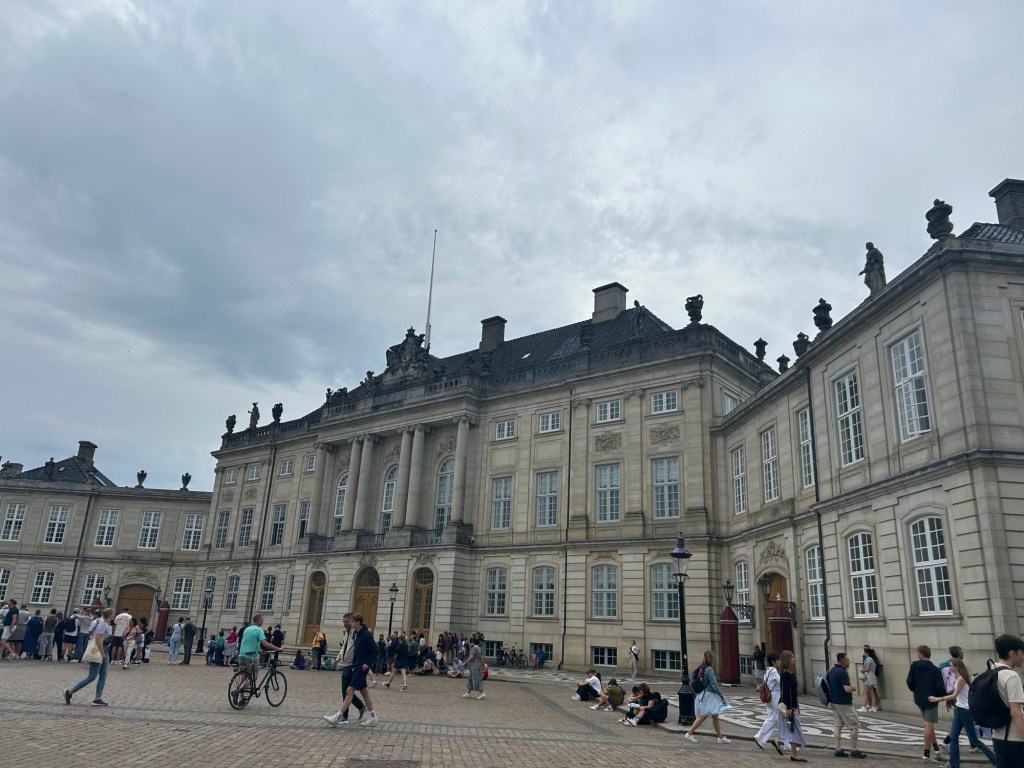
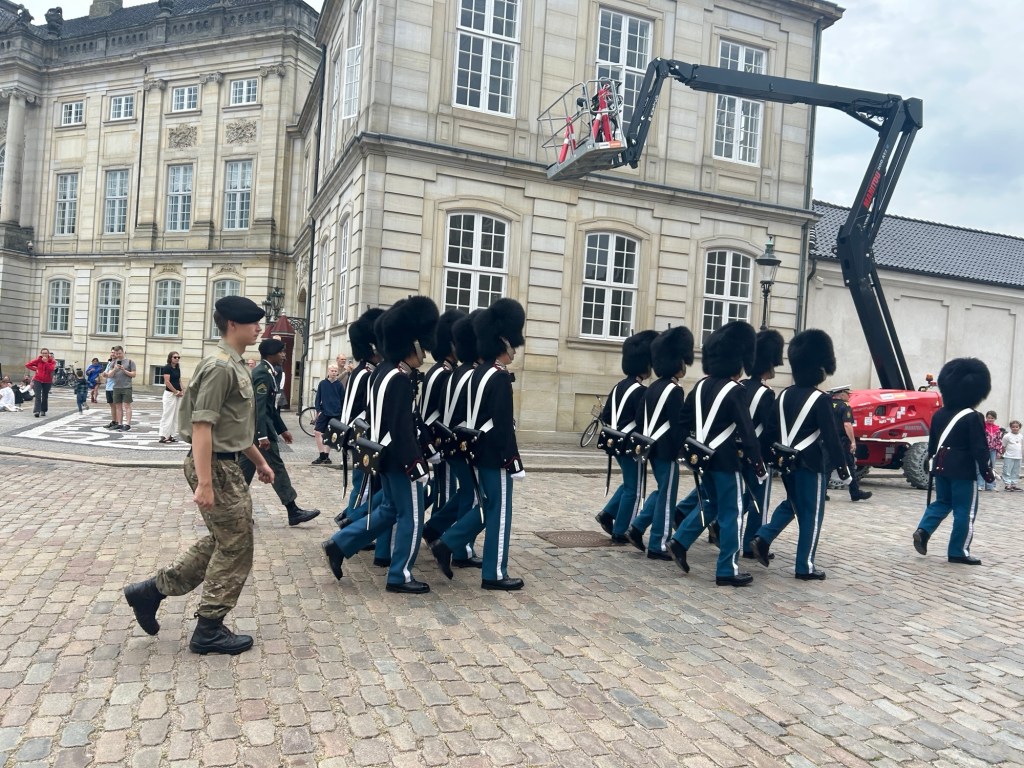
From the halls of Parliament to the residence of the aforementioned most famous Aussie in town, Amalienborg. Alas, we stood in our little group watching the changing of the guard. An invitation to high tea wasn’t sent our way from Queen Mary and the clan. Obviously the message that we were in town didn’t make it through to her. 😂 If I was a little braver, I would have knocked on the door. I would have let them know we were here.
Back to this Danish/Swedish thing. They fought and fight a lot – why did I not know this? The countries battled it out 34 times between 1448 and 1790! More recently IKEA, yes that big Swedish company, named all its floor coverings and rugs after Danish towns. The cry from of the local papers was on discovering this “Is IKEA bullying Denmark? “ I know that some people might suggest that IKEA is bullying everyone, not me I love the place 😂.
The tour ends, with more talk about the rivalry with Sweden. We enjoy a lovely late lunch at a cute and yummy cafe bringing us to the end of our first day here in Europe.


 Travelling with Fi
Leave a comment