We are travelling primarily by train here in Spain, and our experience today was excellent, so well organised with none of franticness we have experienced previously taking trains in Europe (hopefully today isn’t a fluke).
Today we are travelling between Seville and Cordoba. Cordoba is a really busy city with a population of just over 320,000 people. Interestingly we couldn’t get an Uber from the train station to our hotel, perhaps it’s one of the places in Spain that Uber doesn’t operate or there was such high demand here in Cordoba that the availability wasn’t there for us. Fortunately the walk isn’t too difficult although those cobblestoned paths are always a bit of fun with the wheels on our suitcases.
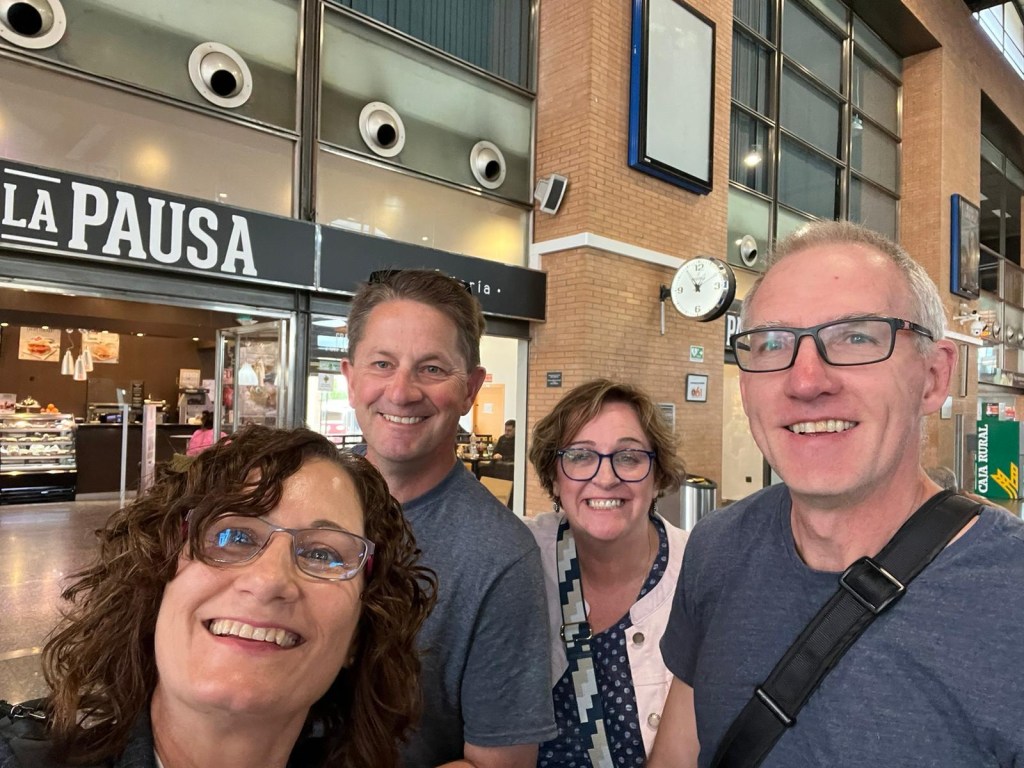
There are lots of people who look like tourists visiting and who could blame them there are a number of wonderful places to visit., The Mezquita (the Cathedral/Mosque of Cordoba) and the Alcazar being two that we will be visiting. We are here less than 24 hours and so as soon as we dump our bags we are off to see what Cordoba has to offer.
Getting here took about 45 minutes on the train from Seville and so as you can imagine all of the history is interconnected. Cordoba was founded by the Romans and was a city of great importance as it was the highest navigable point on the Guadalquivir River.
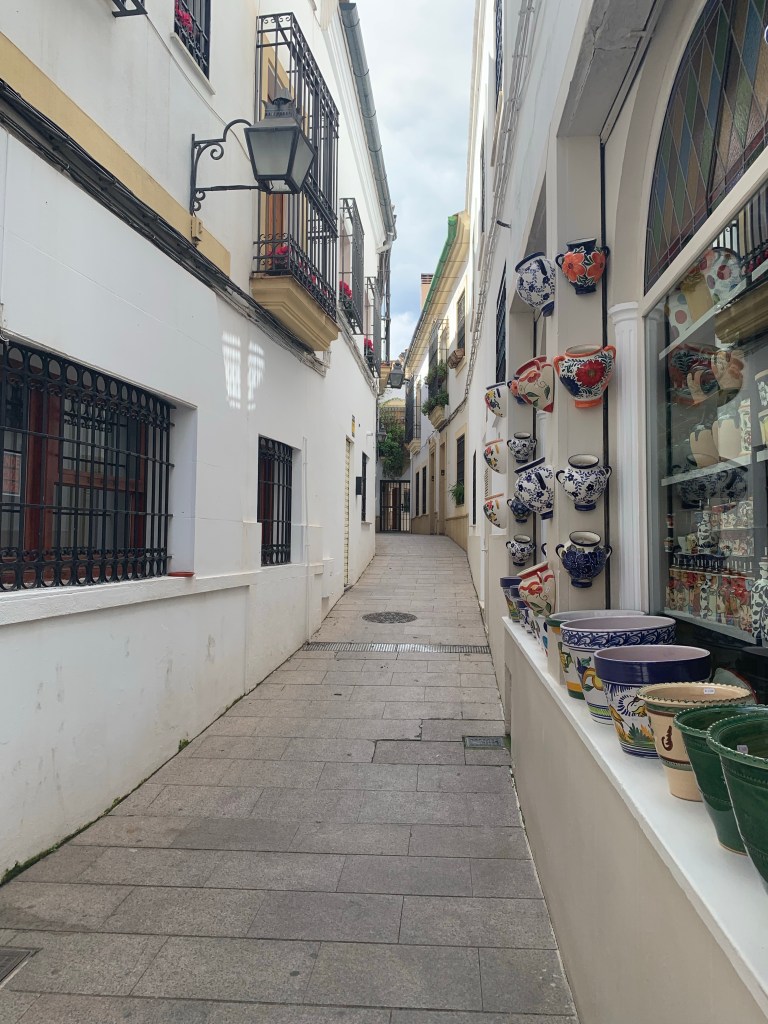
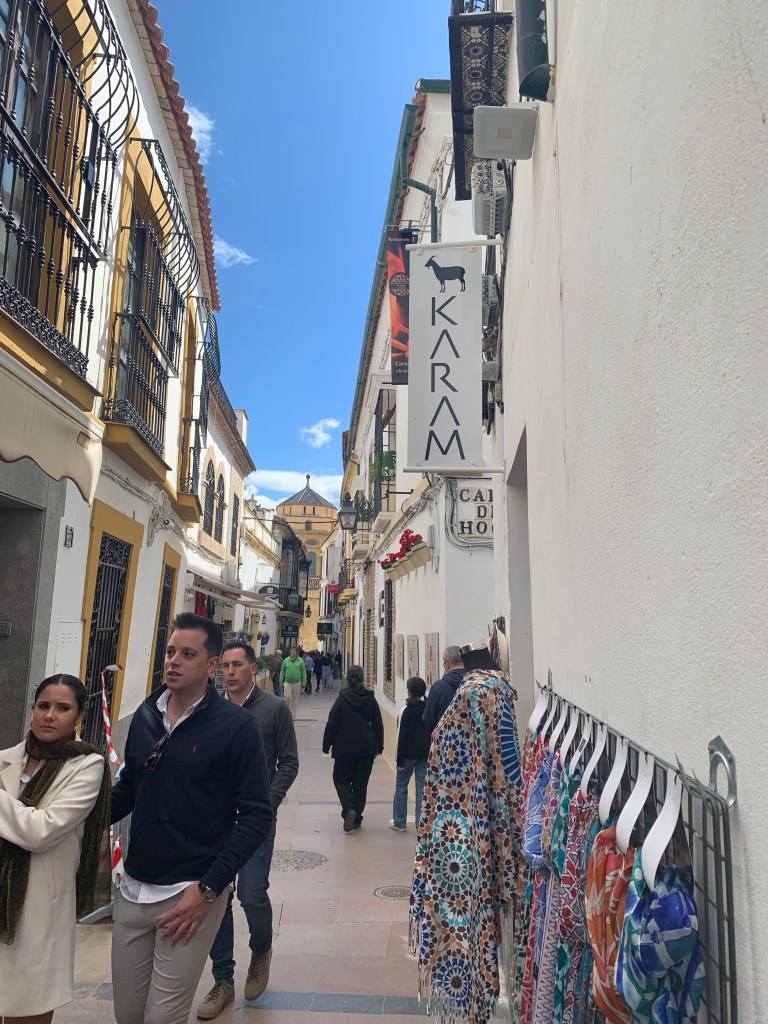
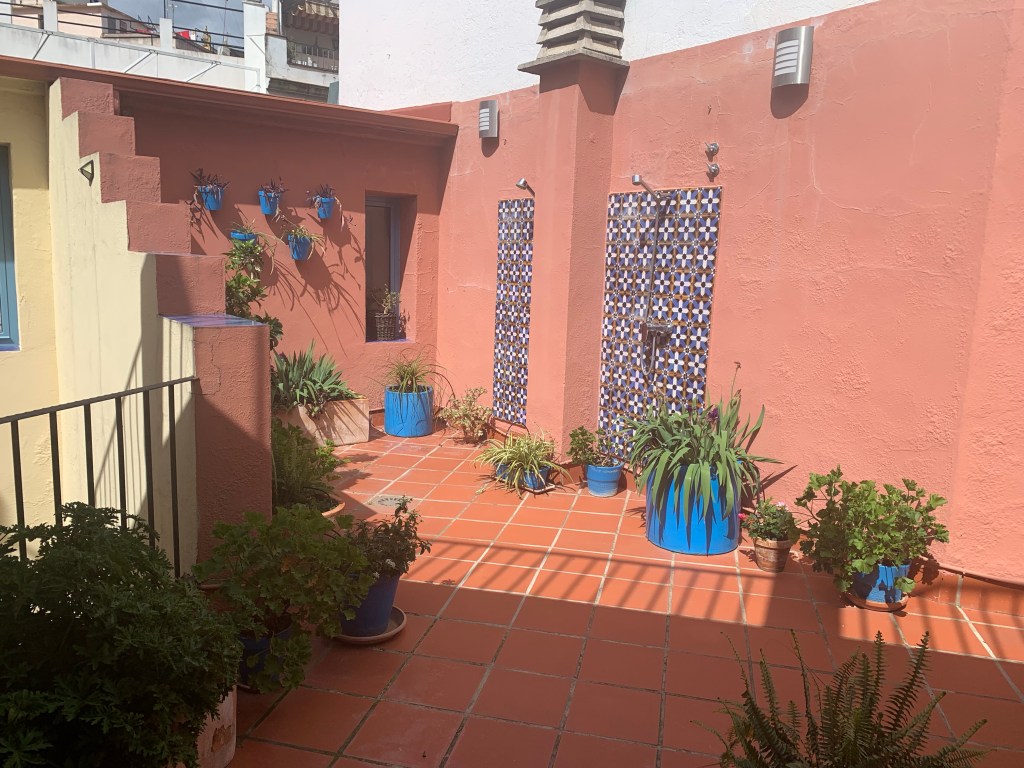
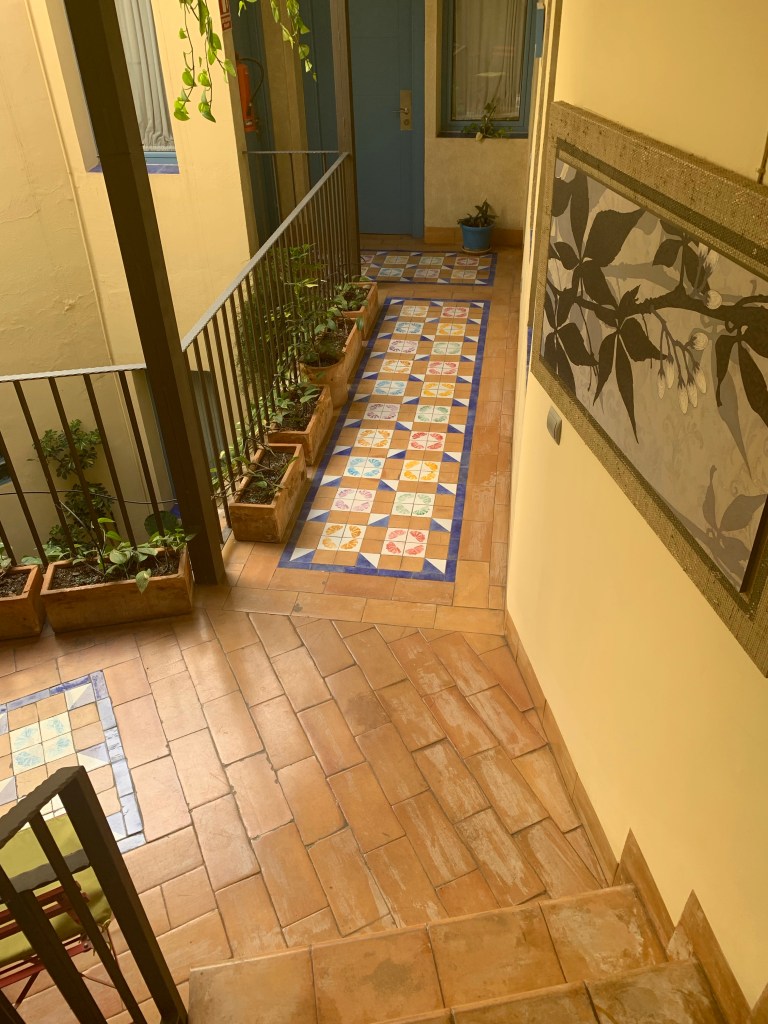
We are staying in a lovely little place called Hotel Conde de Cardenas we have a room on the second floor and there aren’t any lifts and so Steve might have a slightly different viewpoint as he was in charge of the suitcases. It is clean, comfortable and we had a little terrace off our room which was nice. The building that the hotel is in is a national heritage site and I’m not surprised as it had a Riad feeling about it.
Our first stop is at the Mezquita. This magnificent place dates back to 532 when it was the Visigoth Basilica of San Vincento and then the Basilica of Hagia Sophia of Constantinople. Initially the Mezquita was for people of Christian faith, but as people of Muslim faith arrived the area was divided and used by both communities.
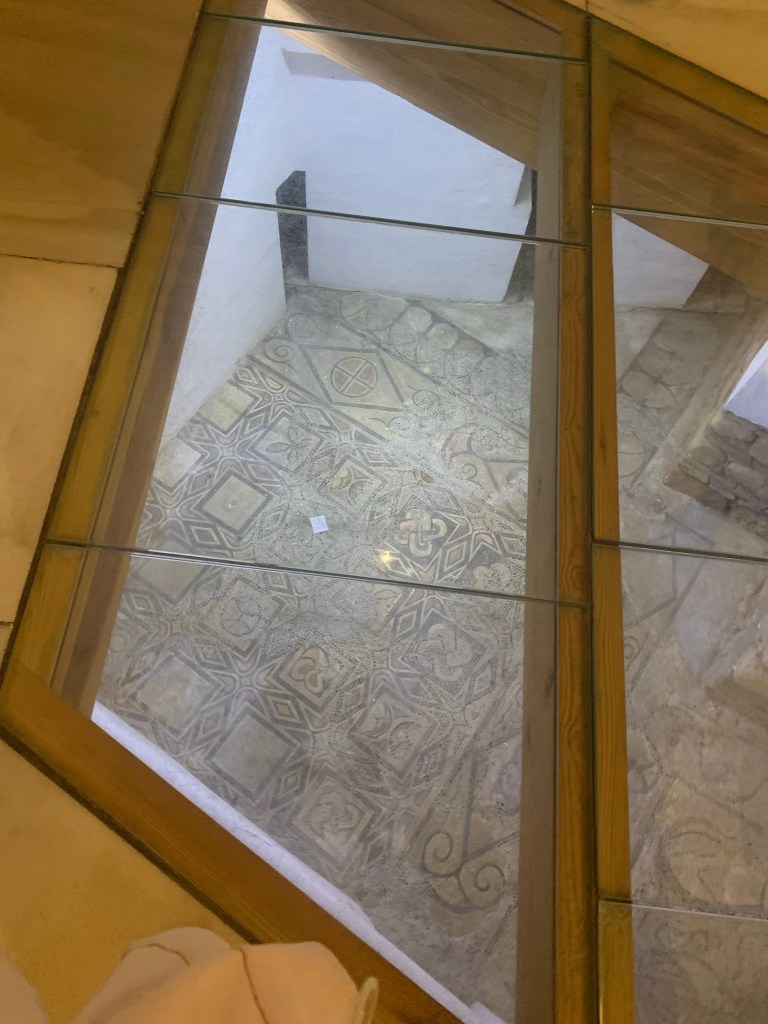
From 711 Cordoba was under Islamic Rule, and in 786 the original Mosque was built and was extended a number of times as the Muslim population grew. A fun fact about Cordoba way back in 935 it was considered to have the largest population in the world. It is said that it was an incredibly peaceful place with people from three different cultures living harmoniously, people of Jewish, Muslim and Christian faiths.
In 1236 the forces of Ferdinand III successfully held siege on Cordoba ending the Islamic rule of the city. At this time the Aljama was consecrated as a Catholic Church.
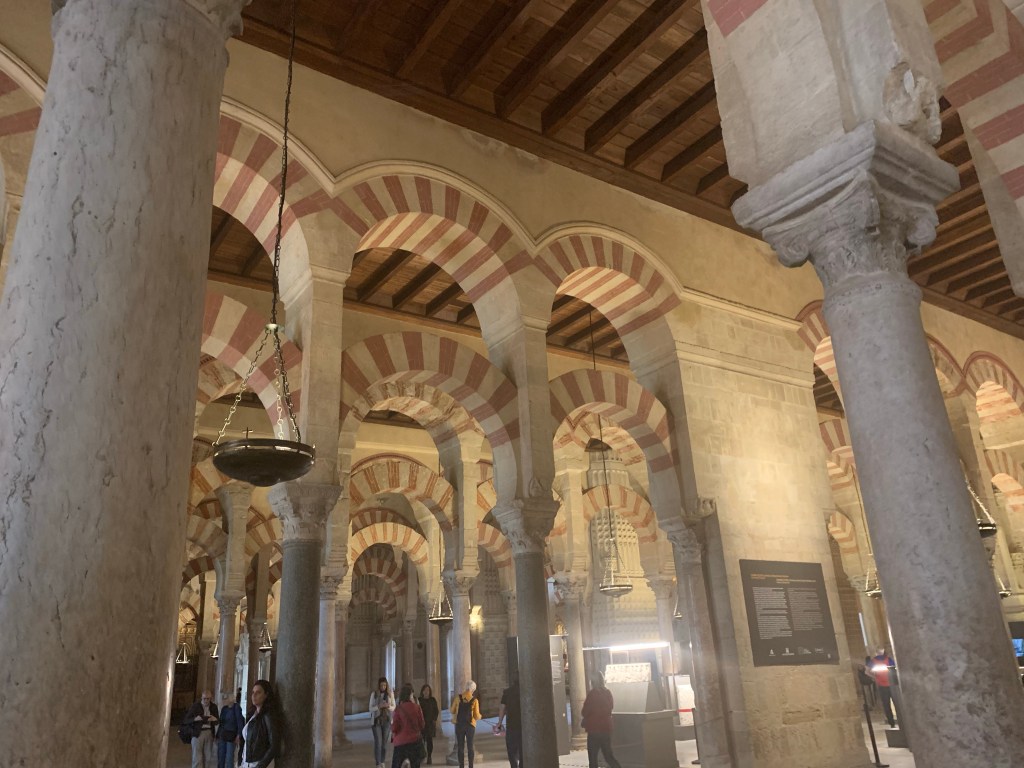
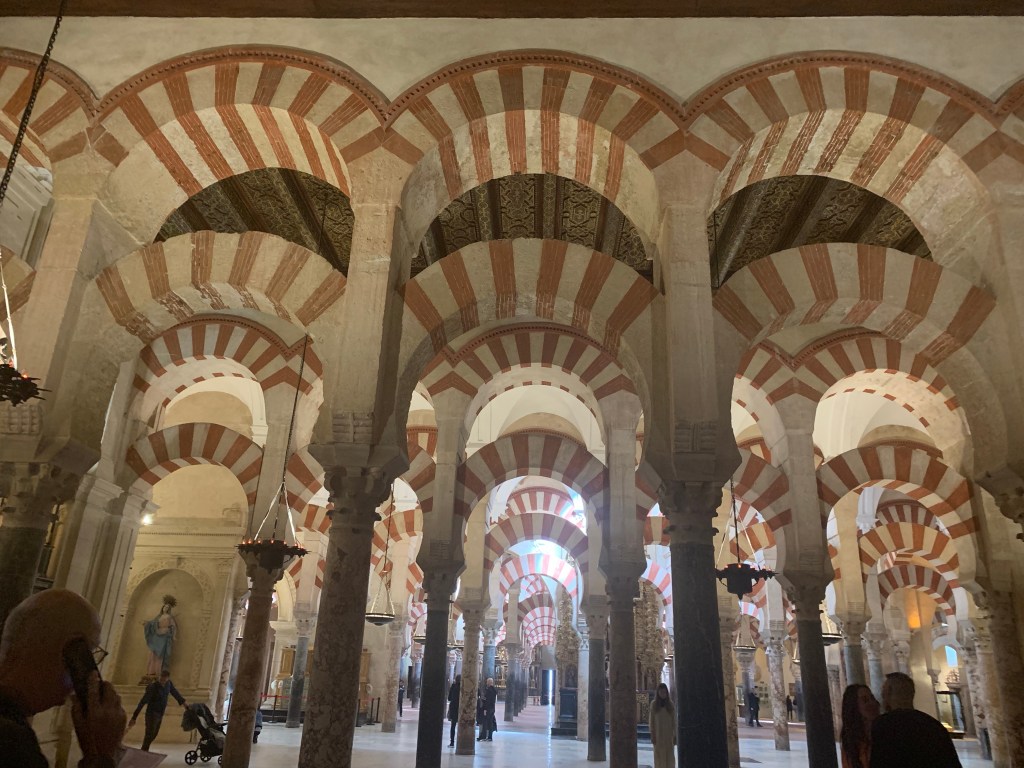
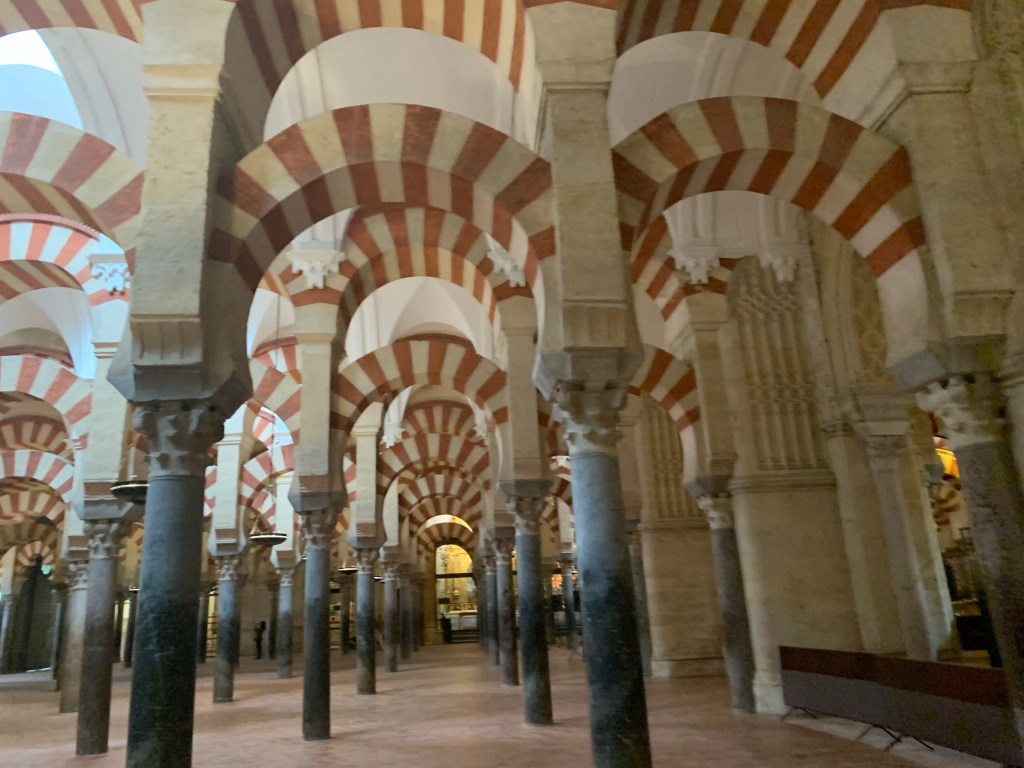
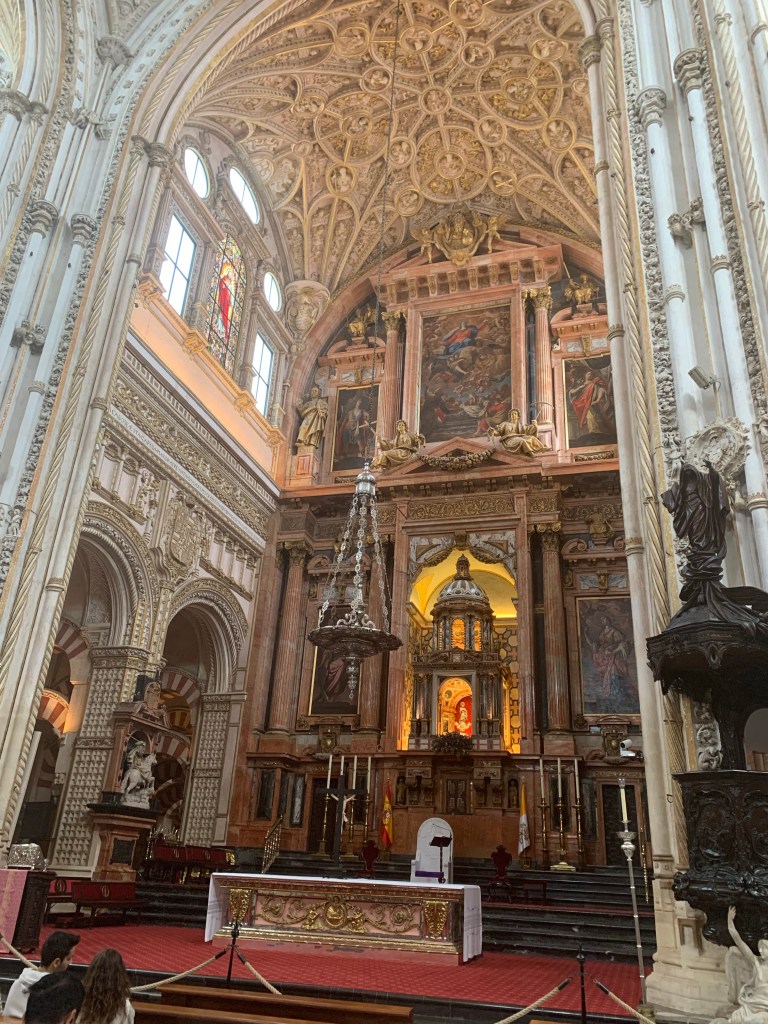
It is absolutely magnificent and Mass is celebrated here every day.
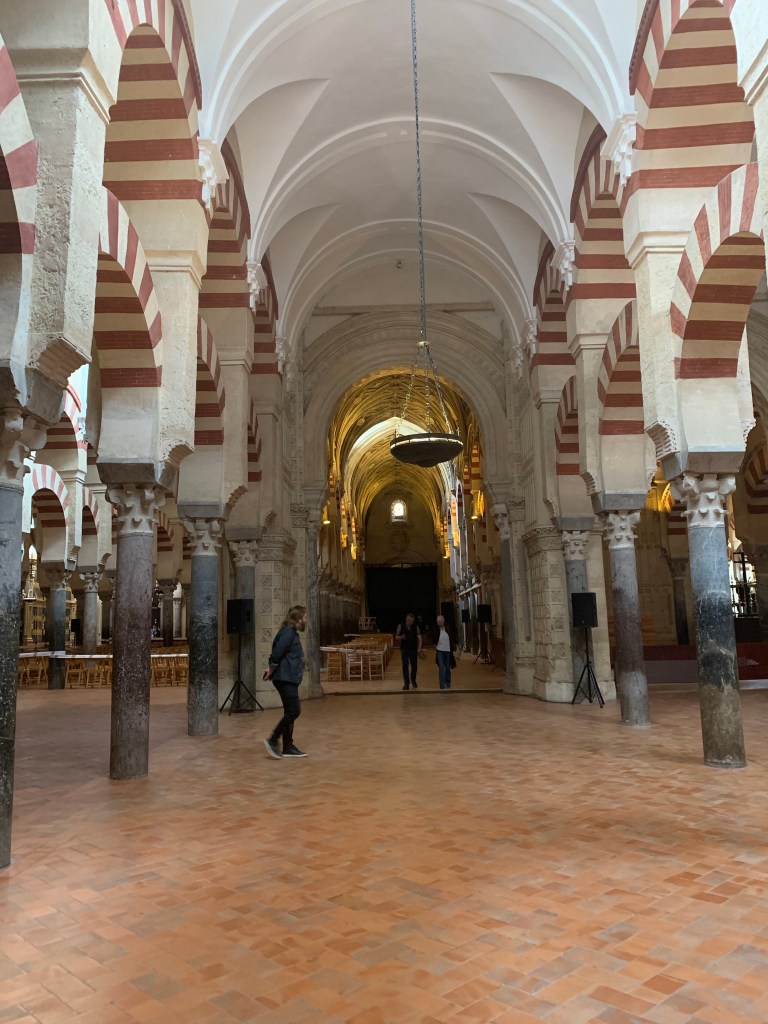
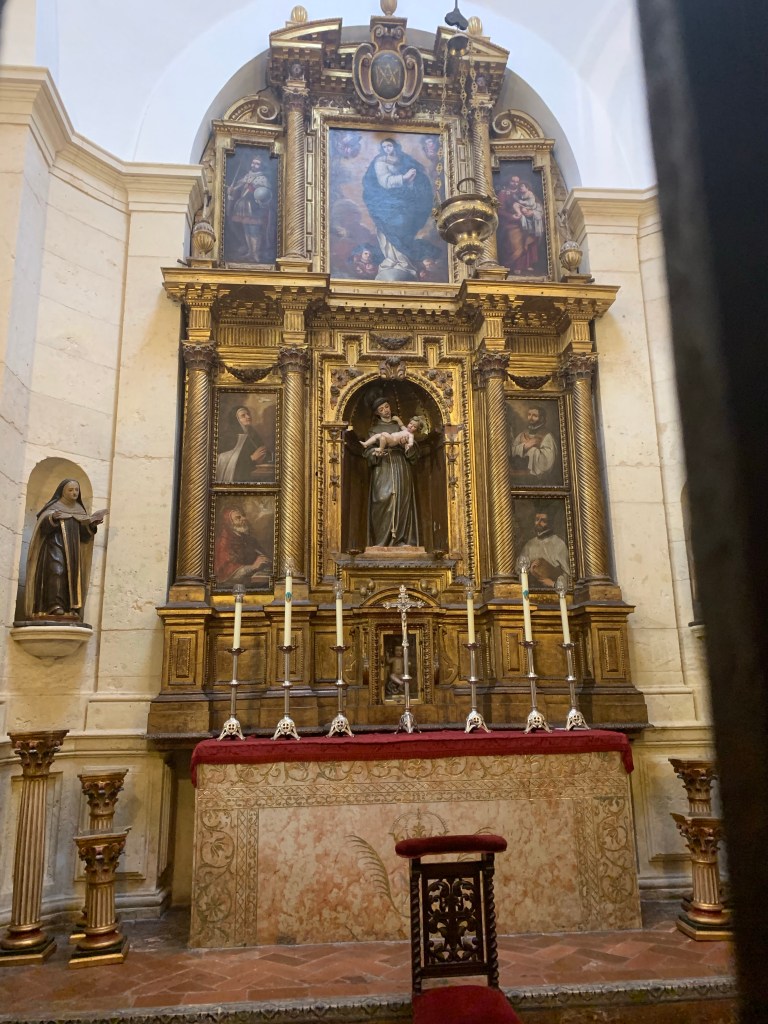
The Mezquita de Cordoba was mentioned while we were touring Seville as a great example of a place where the structure of the original Mosque was only modified slightly by the Christian forces. The Mosque structure is a really important monument in Islamic architecture as it is an example of Moorish architecture of the western Mediterranean regions of the Muslim world.
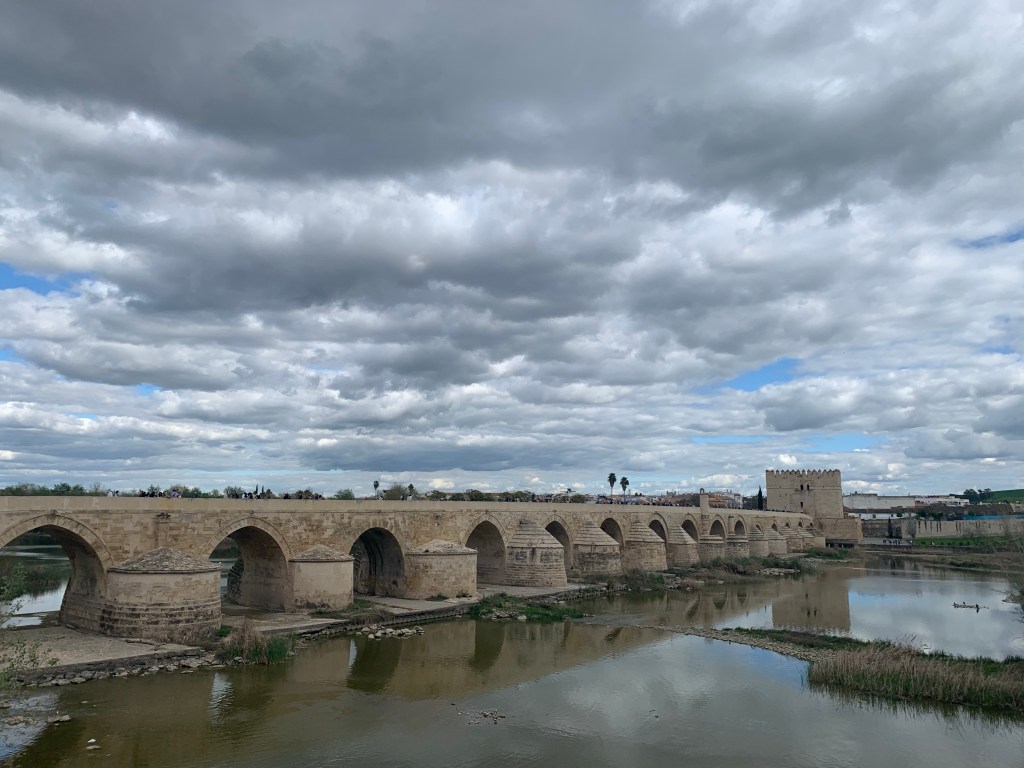
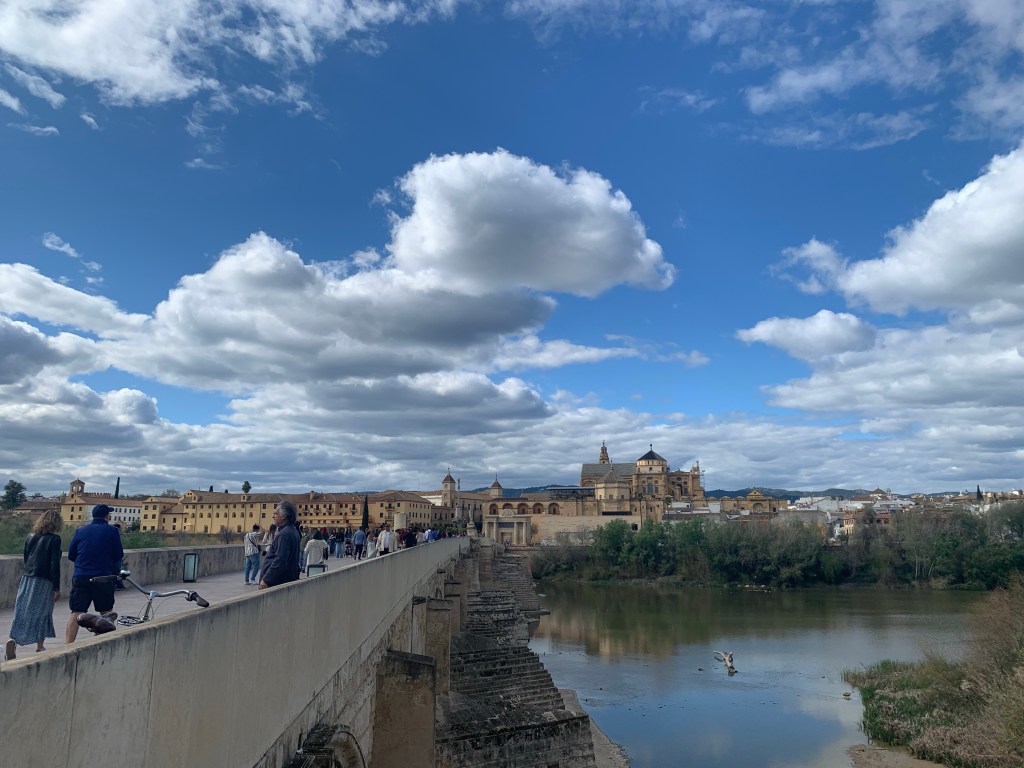
A short walk from the Mezquita to the Roman bridge of Cordoba. It was originally built in the early 1st century BC to cross the Guadalquivir River but has been reconstructed a few times over the years.
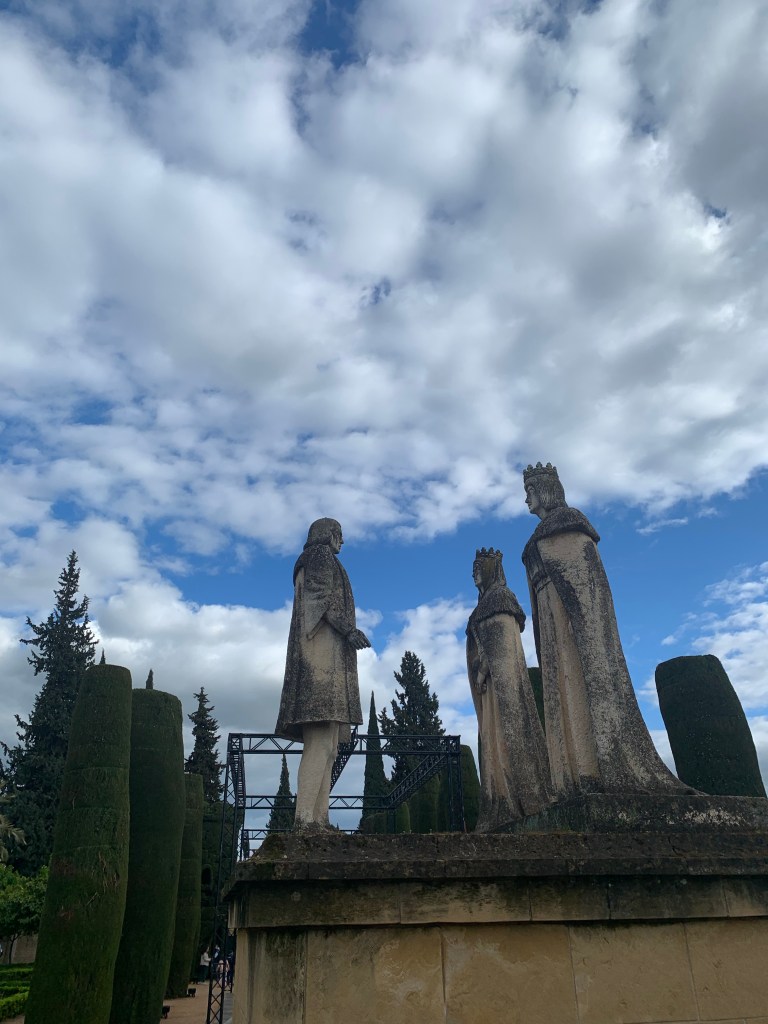
From the Roman bridge to Alcazar de los Reyes Cristianos also known as the Alcazar of Cordoba. The Alcazar is medieval and sits in the middle of historic part of Cordoba, not too far away from the river or the mosque-cathedral. It was built in 1328, on the site that had been the home of the Roman Governor and Islamic Alcazar. It is listed as being a UNESCO world heritage site. This is another structure built on the orders of King Alfonso XI he was a very busy man.
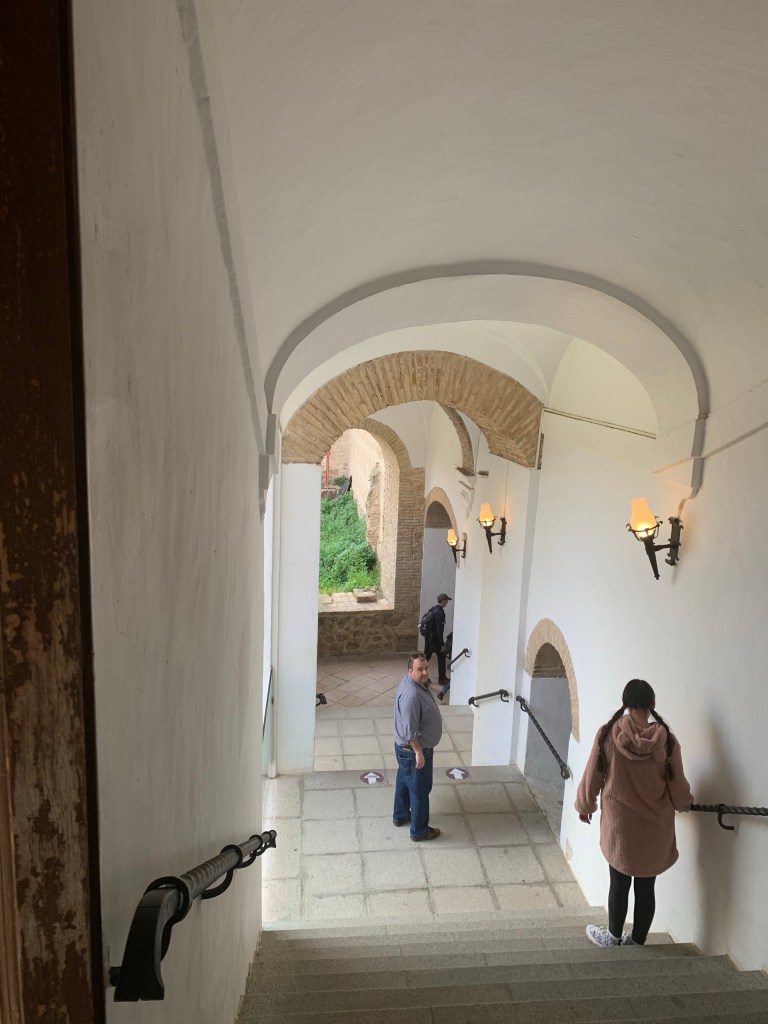
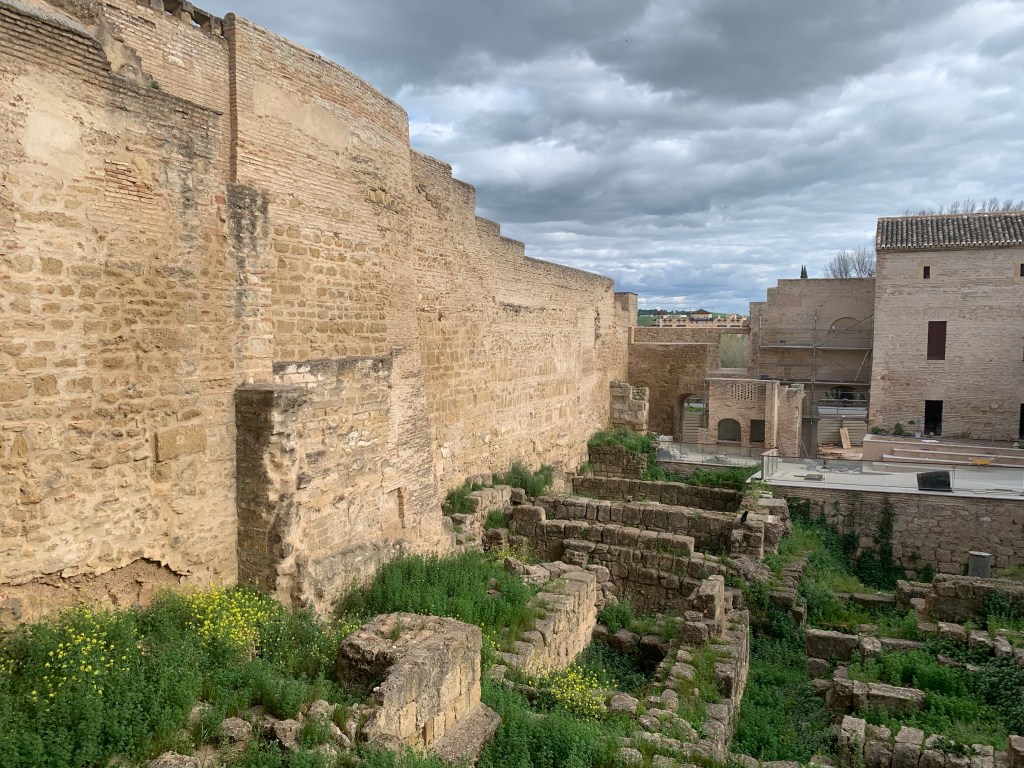
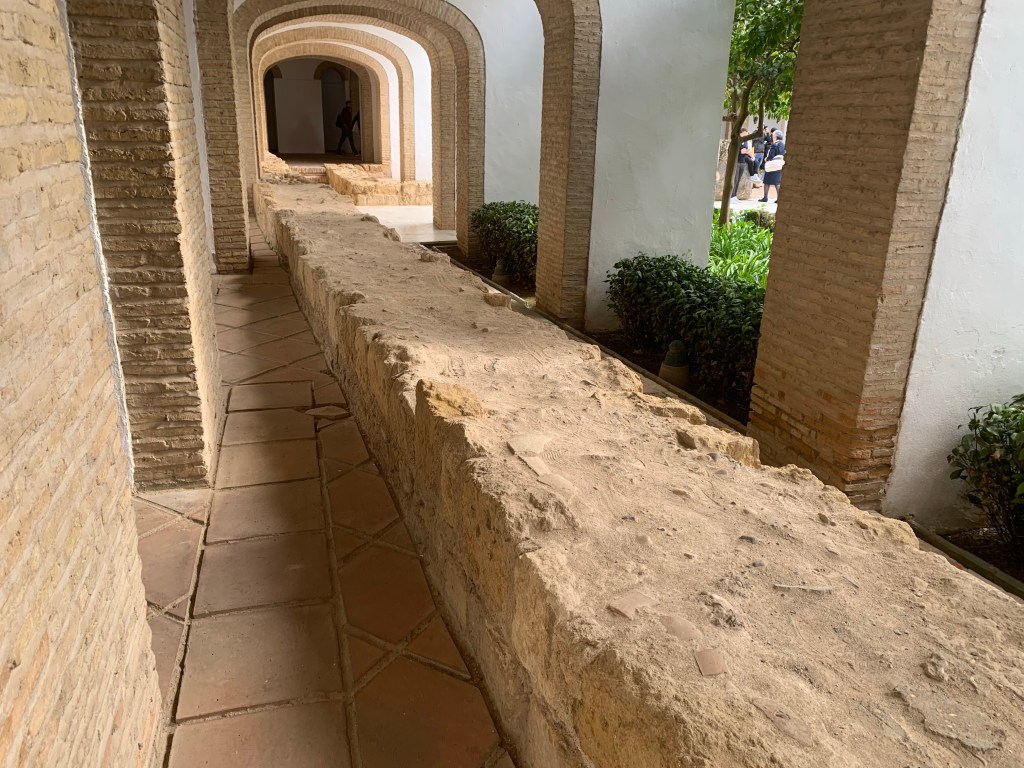
If these walls could talk! This Alcazar was involved in a civil war, was one of the first permanent tribunals for the Spanish Inquisition with many rooms converted into torture and interrogation rooms. In about 1486/87 Admiral Columbus visited and was put on the payroll and asked to find a western route to Asia and then racing forward a few centuries in 1810 was used as a garrison for Napoleon Bonaparte’s troops and I’ve just scratched the surface…..
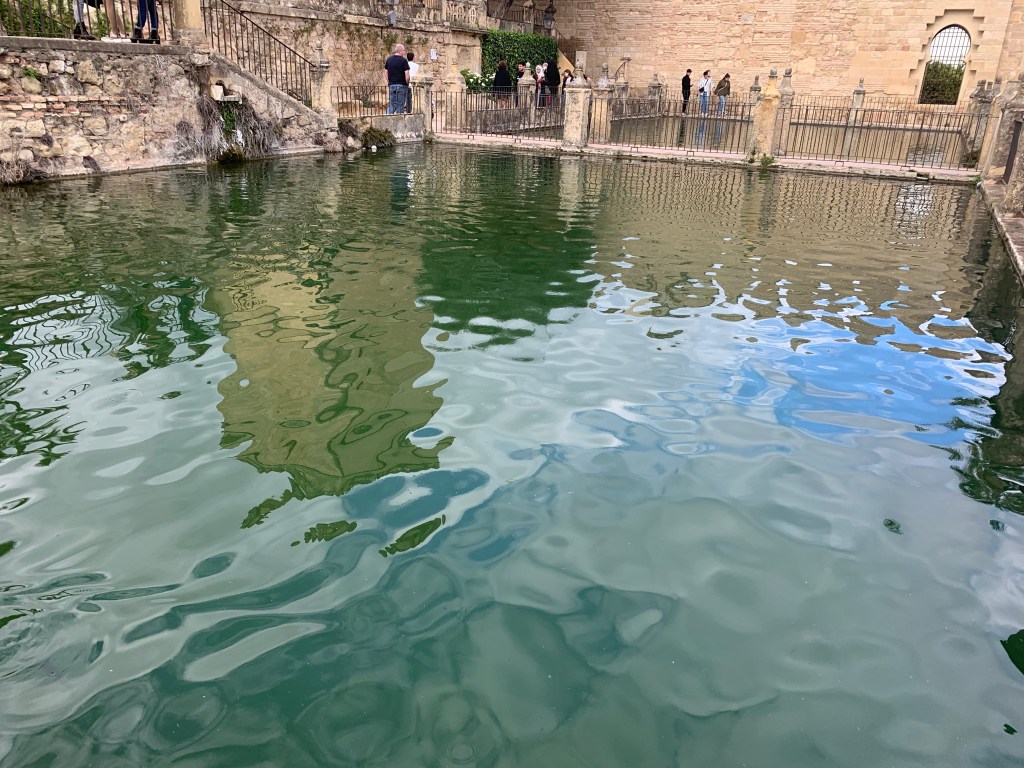
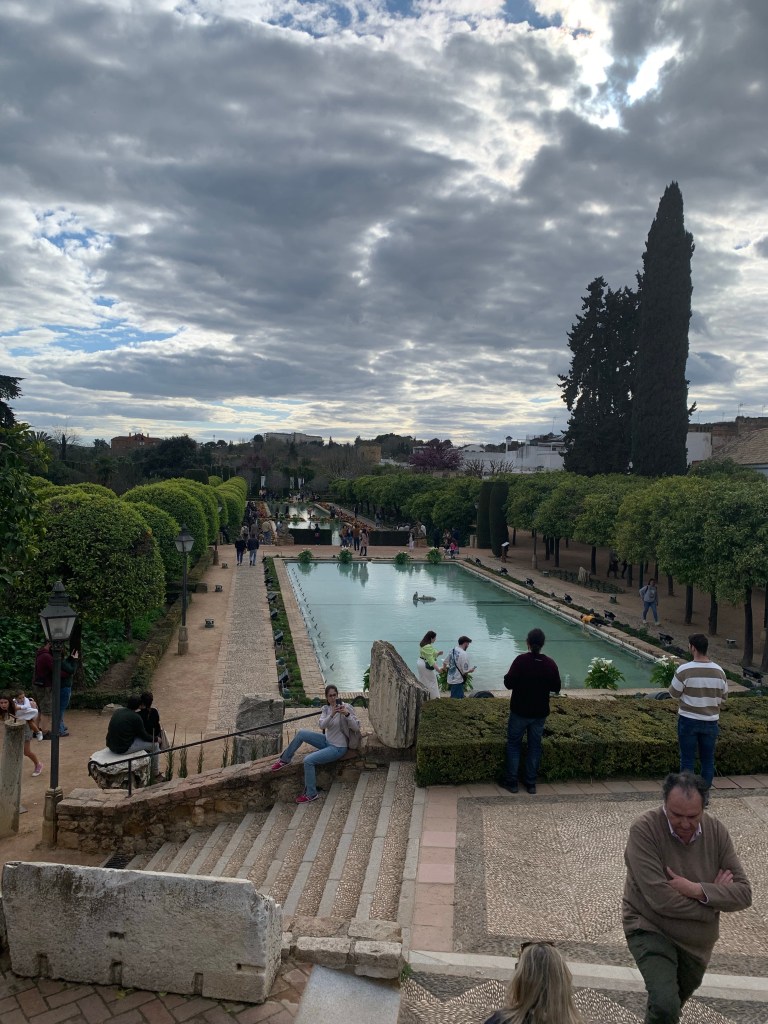
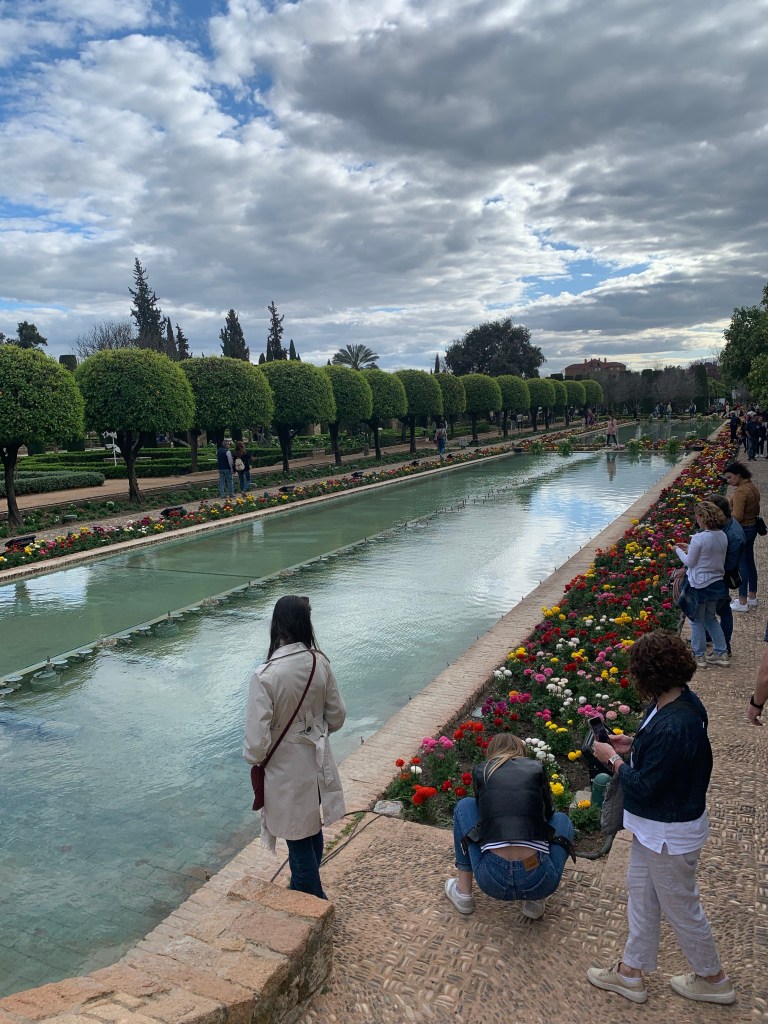
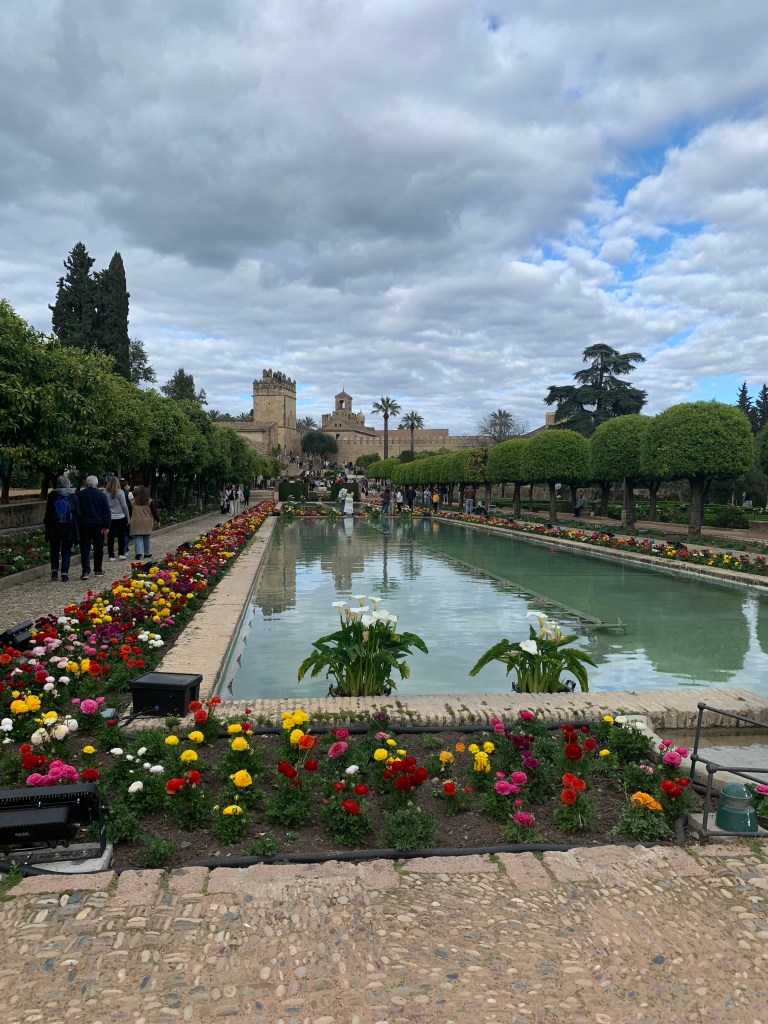
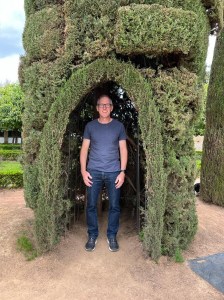
The gardens are so beautiful and have existed in some form since the 10th century when an aqueduct to bring water was constructed. Over the years the gardens have changed, sometimes flourishing and at other times neglected. They are lovely to walk through and I am conscious that we didn’t do them justice as they were our last stop on a long day.
Dinner at a nice little place near our hotel. Our restaurant choice continues to be driven by what is open (and looks yummy) as most people don’t eat until after 8.00pm, and by that time we are generally ready to hit the sack after a long day wandering whatever city we find ourselves in.
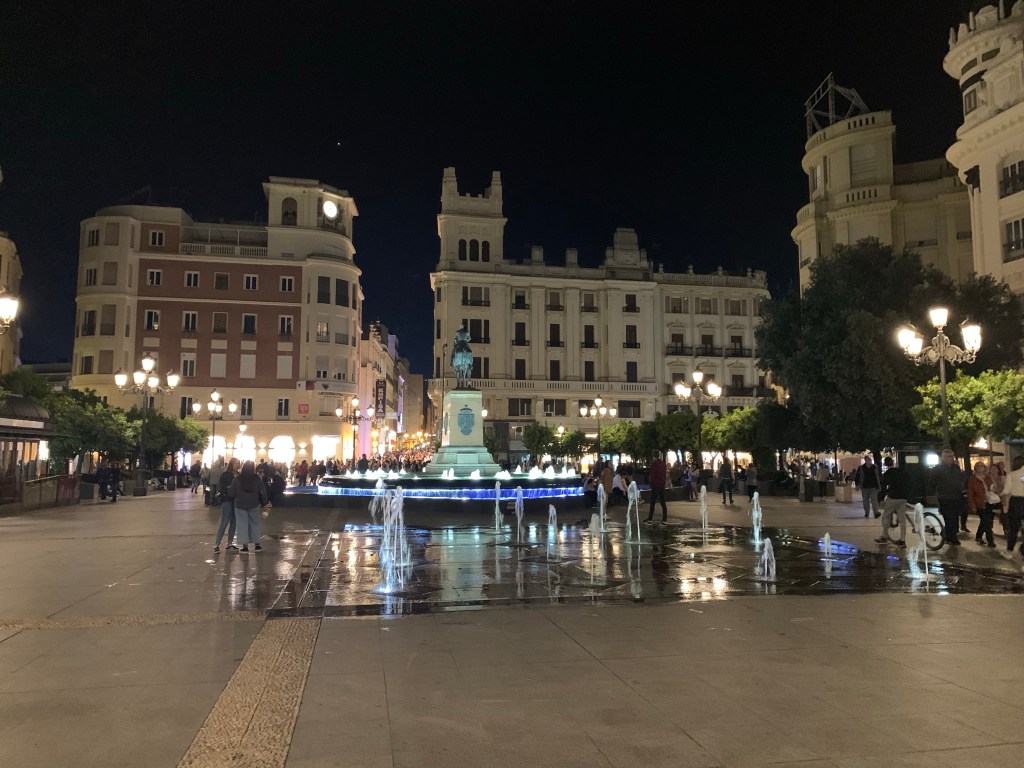
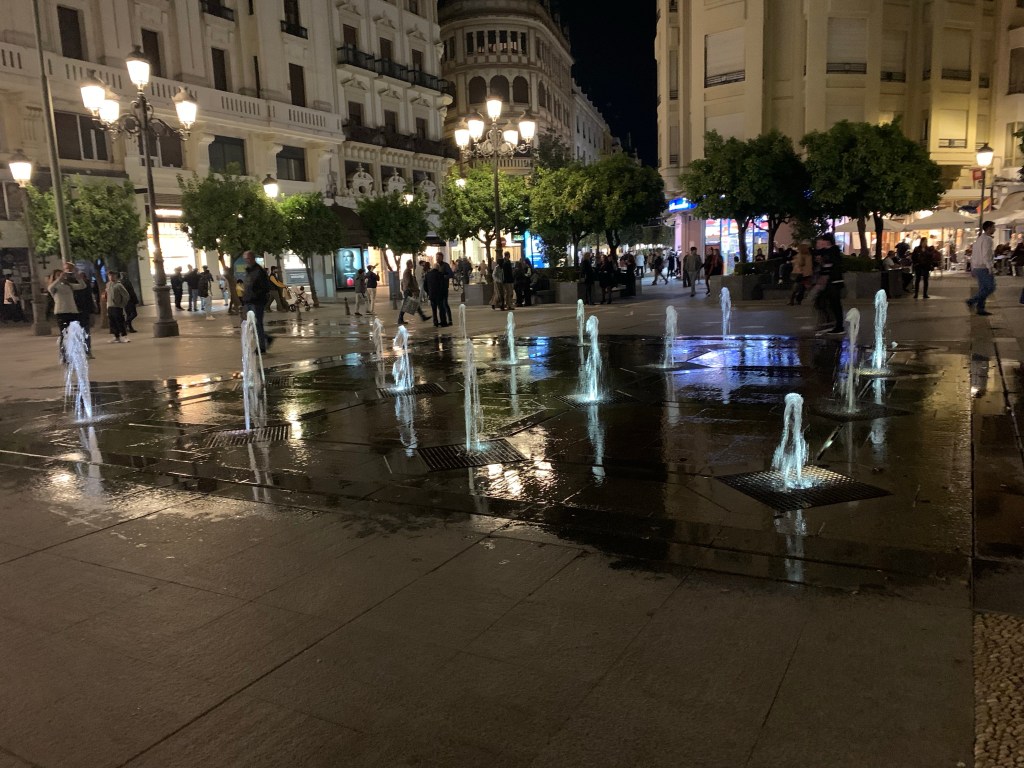
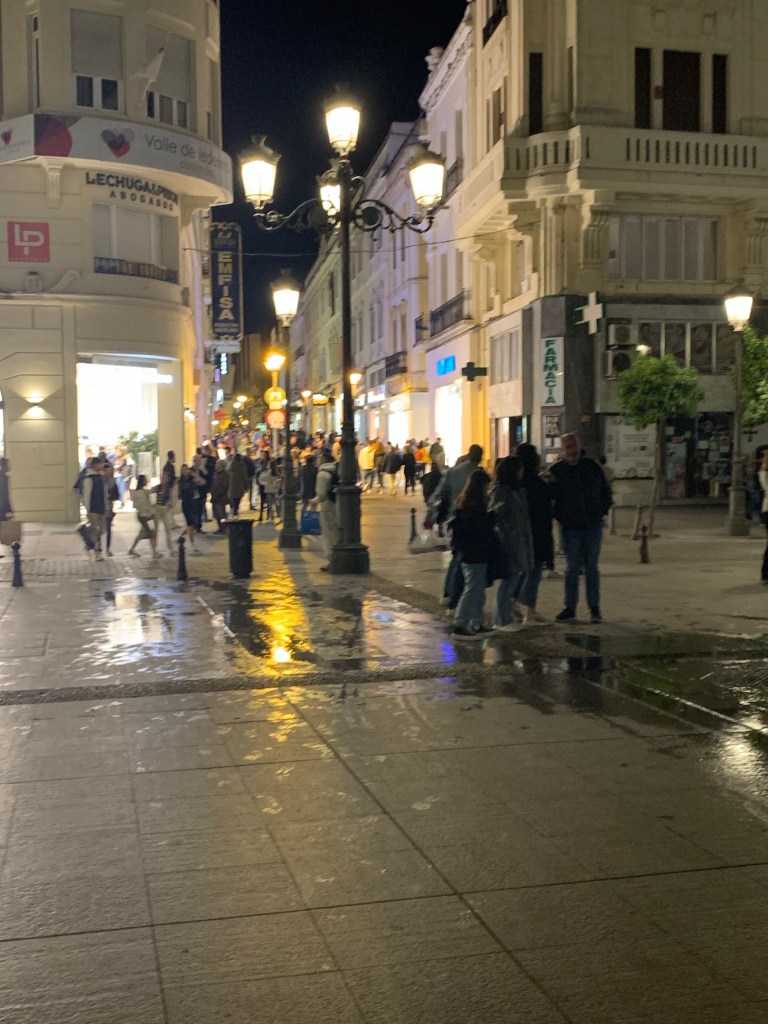
As we walk the cobble stoned streets looking for an ice cream (which we find) there is lots of happy noise with people spilling out of pubs and restaurants in this fascinating place. We are so pleased that we had the chance to stay overnight here in Cordoba originally it was going to be a day trip.


 Travelling with Fi
Leave a reply to Julia Cancel reply